
“I do not have to tell you who won the war. You know, the artillery did.”
LTG George S. Patton
Mobilization of the Regiment
121st Field Artillery Regiment (October 15, 1940 to February 1, 1942)
The 121st Field Artillery Regiment was called to federal service as part of the 32nd Division on October 15, 1940. The Regiment’s mobilization occurred concurrent with a general mobilization of the National Guard 14 months prior to Pearl Harbor as the U.S. built military and industrial capacity in response to Germany’s invasion of Poland and France. Shortly after mobilization, the 121st Field Artillery Regiment moved from locations in Wisconsin to Camp Beauregard, Louisiana. Upon arrival in Louisiana, the organization and equipment of 121st Field Artillery Regiment reflected its experience in World War I. With the absence of modern equipment and doctrine the Regiment’s training was initially focused on military discipline and physical fitness.
Between January and March 1941 the 121st Field Artillery Regiment posed for photographs. The Soldiers in the photos below are mostly from the Wisconsin cities and towns where the original National Guard units were located. The units and Wisconsin communities from which they originated included: Regimental HQs – Abbotsford; Service Battery – Mauston; Medical – Whitefish Bay; Band – Janesville; HQ 1-121st FA – Hartford; Battery A – Milwaukee; Battery B – Green Bay; Battery C – Milwaukee; HQ 2-121st FA – River Falls; Battery D – Milwaukee; Battery E – Milwaukee; Battery F – Milwaukee. At the time of its mobilization no one could have anticipated that the Field Artillery Regiment from the Wisconsin National Guard would deploy around globe over the next five years.
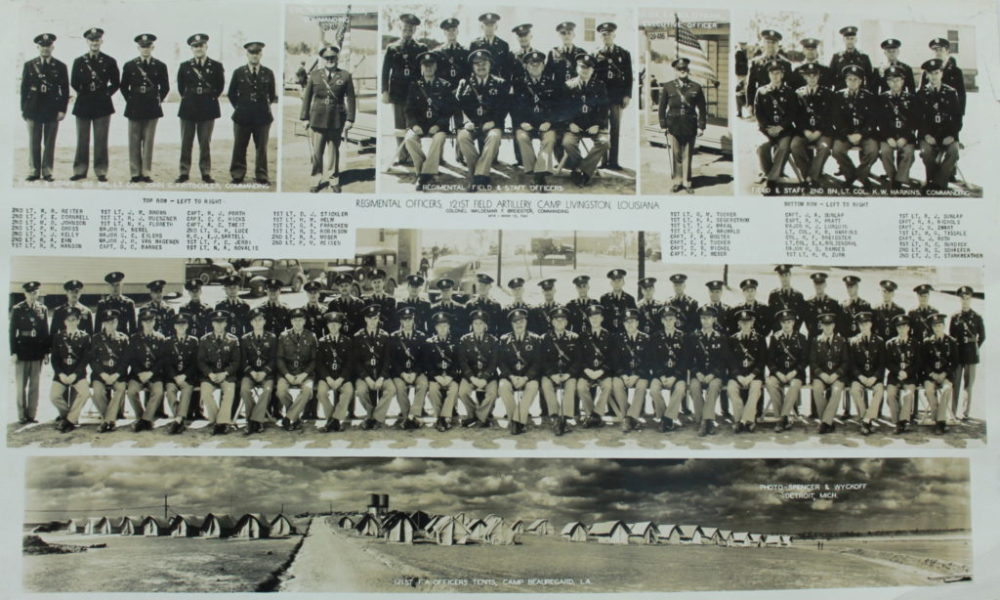 Regimental Officers, 121st Field Artillery Regiment
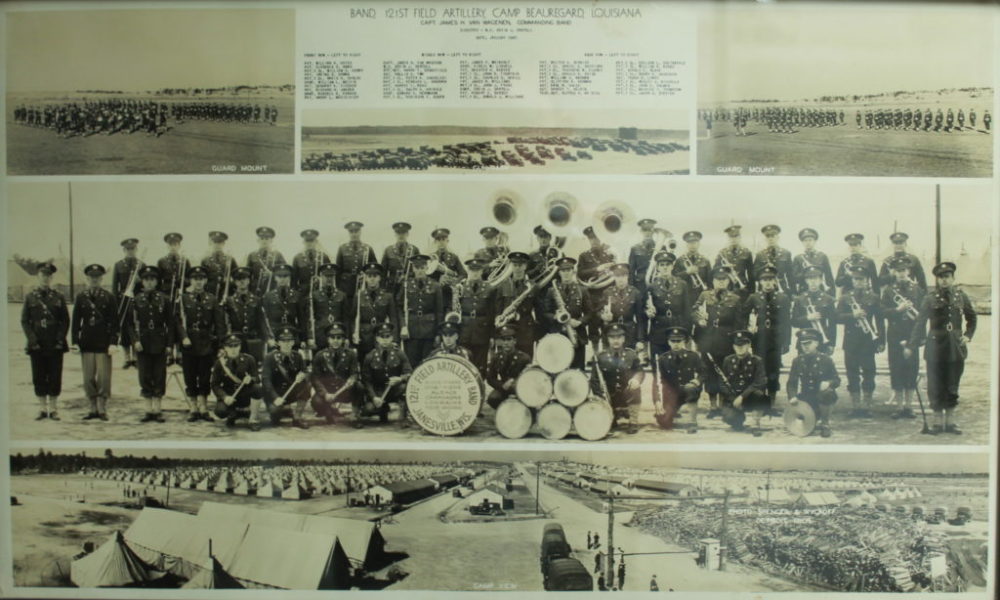
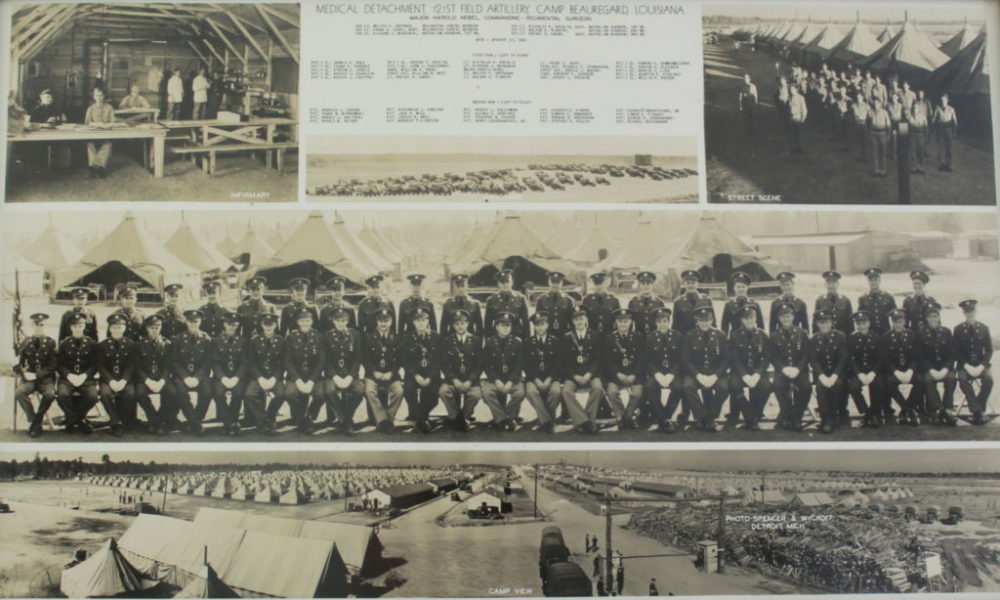
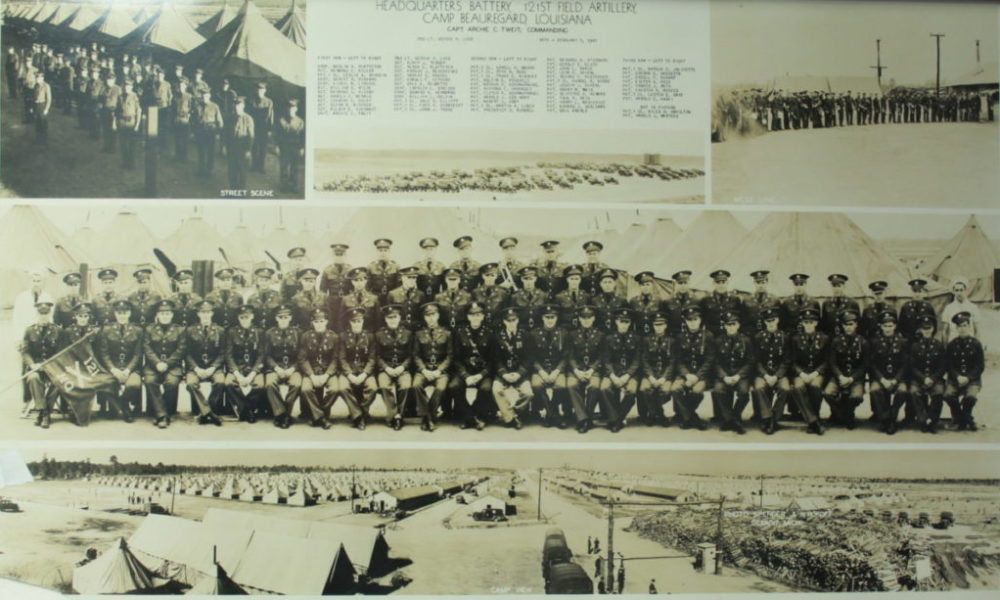
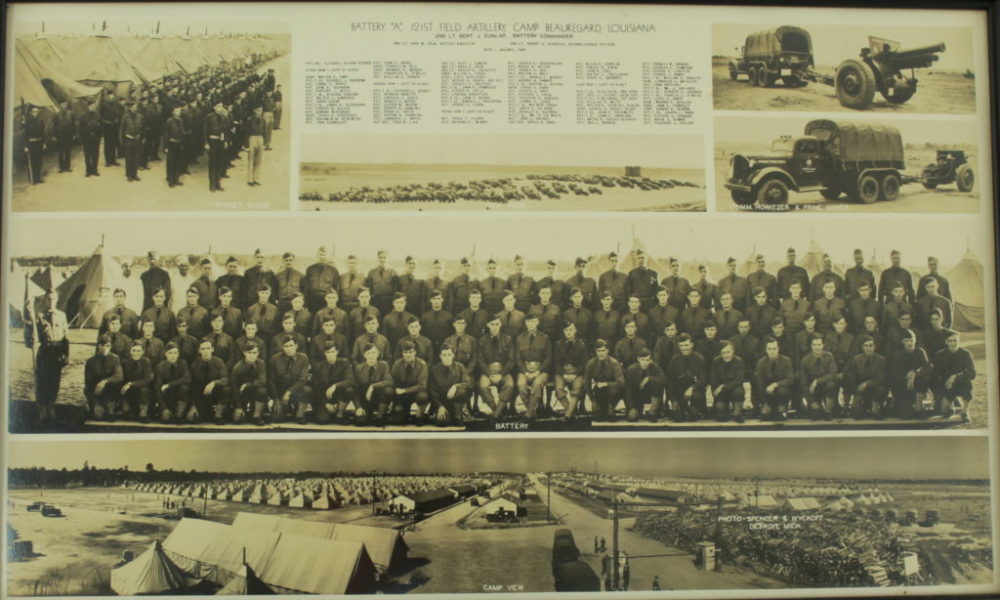
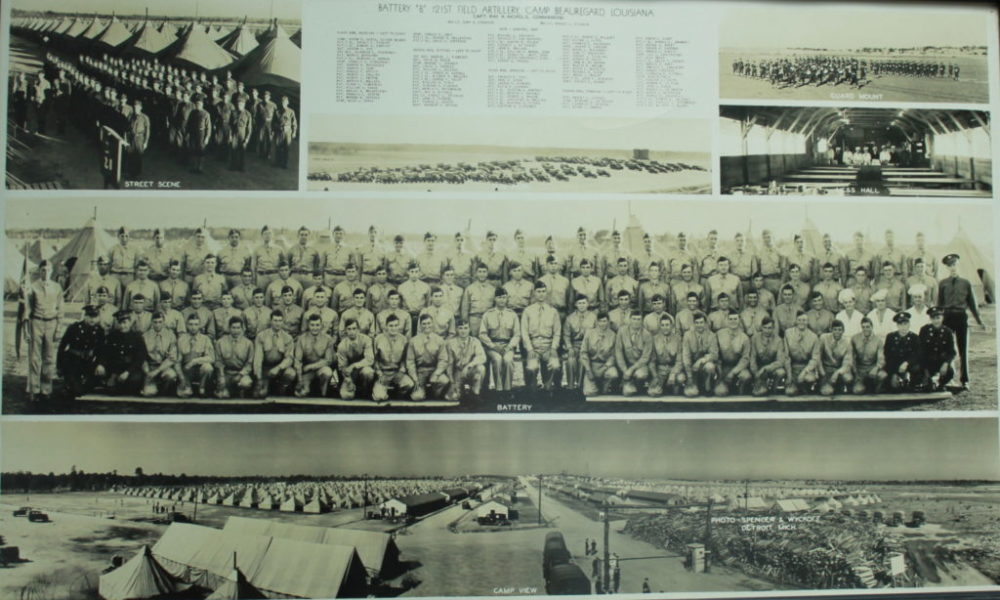
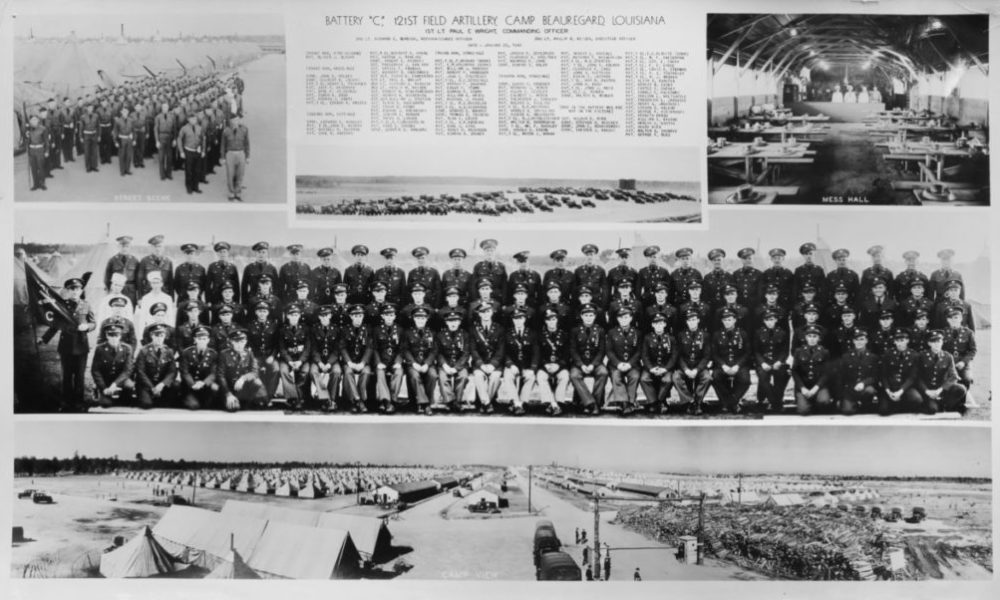
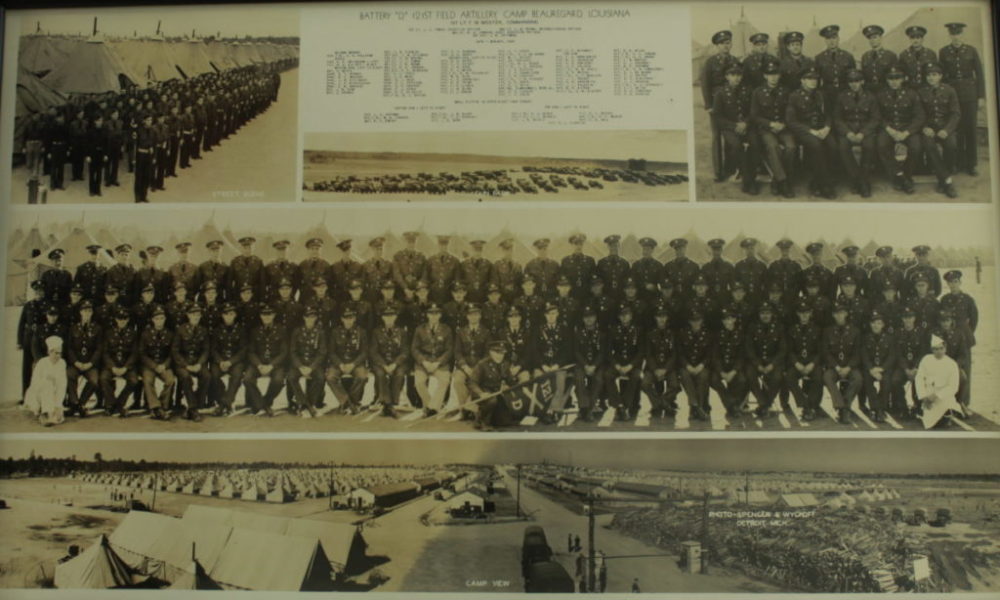
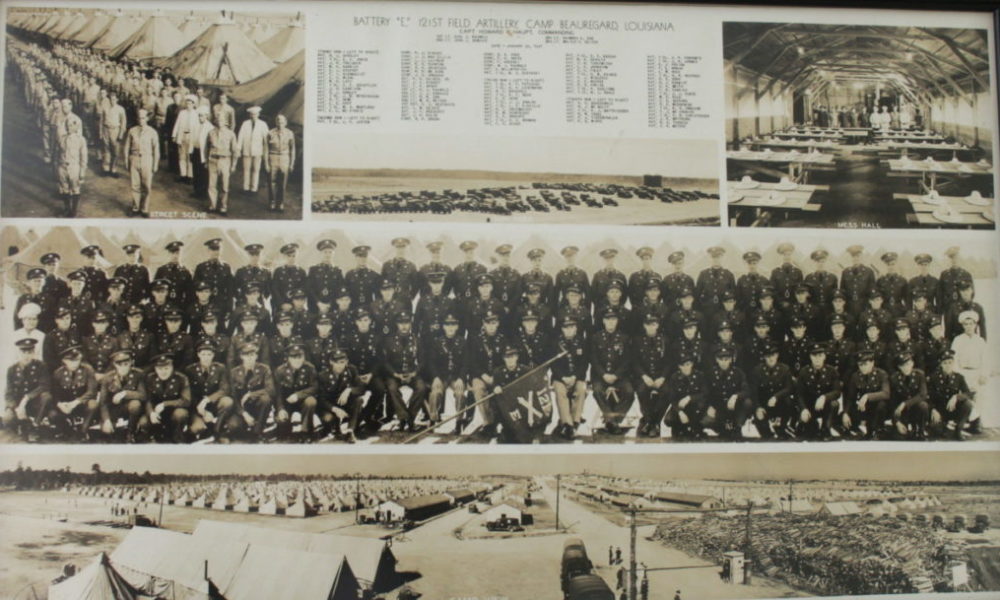
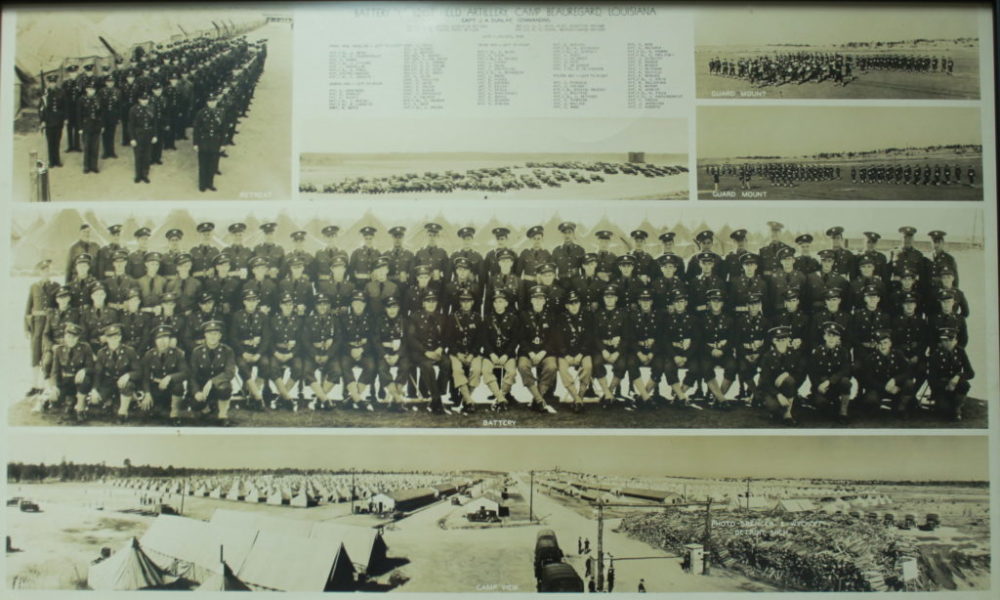
The 121st Field Artillery Regiment’s training would take on greater focus after Pearl Harbor and the formal U.S. declaration of war on Japan and Germany. On February 1, 1942 the 32nd Division was reorganized from a four Infantry Regiment, two Brigade organization into the triangularized 32nd Infantry Division with three Infantry Regiments. The organic Field Artillery Regiments (120th, 121st, and 126th) of the historic 32nd Division were also re-organized. The 121st Field Artillery Regimental Headquarters would become the headquarters of the newly formed 173rd Field Artillery Regiment, The 1st Battalion 121st Field Artillery would become the 121st Field Artillery Battalion, a unit in the 32nd Infantry Division. The 2nd Battalion 121st Field Artillery Battalion would become 2nd Battalion 173rd Field Artillery Regiment. The 173rd Field Artillery Regiment’s 1st Battalion was made up of Soldiers from the 2nd Battalion 126th Field Artillery Regiment.
The 121st Field Artillery Battalion remained a part of the 32nd Infantry Division throughout World War II and accompanied the Division to the Pacific in May of 1942. The 173rd Field Artillery Regiment underwent further re-organization in February of 1943. The Regimental headquarters became the 173rd Field Artillery Group and deployed to Europe in July 1944. The 1st Battalion become the 173rd Field Artillery Battalion and the 2nd Battalion become the 985th Field Artillery Battalion, both of which deployed to North Africa in 1943.
Pacific Theater
121st Field Artillery Battalion (May 1942 – February 28, 1946)
The 121st Field Artillery Battalion, a decorated unit of the Wisconsin Army National Guard, was an integral component of the 32nd “Red Arrow” Division, the battalion’s journey spanned from the mobilization of citizen-soldiers in the Midwest to some of the most grueling jungle and mountain warfare in history. Armed primarily with the 75mm pack howitzer, the 121st provided essential direct support to infantry during amphibious landings and inland advances across New Guinea, Biak, and the Philippines.
Mobilization and Reorganization
The lineage of the 121st Field Artillery in World War II began with the mobilization of the 121st Field Artillery Regiment. On October 15, 1940, Wisconsin National Guard units were ordered into federal service. At that time, the regiment was spread across several Wisconsin communities: the Headquarters Battery was based in Abbotsford, with battalions in Hartford, Whitefish Bay, and Green Bay.
In January 1941, the unit moved to Camp Beauregard, Louisiana, for intensive training. However, the onset of modern “triangular” division structures led to a major reorganization in February 1942. The 121st Field Artillery Regiment was broken up; its 1st Battalion was redesignated as the 121st Field Artillery Battalion, while other elements were utilized to form the 173rd Field Artillery Regiment, which eventually served in the Mediterranean and European theaters. The newly constituted 121st FA Battalion retained its Wisconsin character and was assigned to the 32nd Infantry Division for service in the Pacific.
Deployment and the New Guinea Campaign
In May 1942, the 121st arrived in Australia as part of the initial buildup of American forces in the Southwest Pacific. After further training, the battalion was committed to the New Guinea campaign. Its first major independent operation was the landing at Saidor on January 2, 1944, as part of the “Michaelmas” Task Force.
The landing on “Red” and “White” beaches was initially uneventful for the command party, but subsequent waves of LSTs (Landing Ship, Tanks) drew fire from Japanese batteries, resulting in the battalion’s first casualties. The tactical environment of New Guinea was a shock to the artillerymen; heavy rains made roads impassable and wheeled vehicles nearly useless, forcing a heavy reliance on tracked tractors and manual labor to move guns and ammunition.
A significant tragedy struck the battalion during the Saidor operation. On February 7, 1944, the Battalion Commander, Major Earl Kindig, was acting as an aerial observer in a liaison plane. While attempting to adjust fire on Japanese escape routes in the mountains southwest of Gabutamon, the plane crashed or was shot down. Despite continuous searches by ground and air patrols, no trace of Major Kindig or his pilot was found. Major Francis N. Khope subsequently assumed command of the battalion.
Operation Biak: The Struggle for the Caves
Following the securement of Saidor, the 121st was assigned to the Hurricane Task Force for the invasion of Biak Island in May 1944. This operation would become one of the battalion’s most significant trials. The 121st landed at Bosnek on May 27, 1944, under the command of Lieutenant General Robert L. Eichelberger’s task force.
Artillery support on Biak was complicated by the island’s unique coral terrain, which was honeycombed with deep caves used by the Japanese as near-impregnable defensive positions. The 121st’s 75mm pack howitzers were prized for their ability to be disassembled and moved quickly through dense scrub and coral terraces. During the battle for Mokmer Drome, the battalion’s batteries were frequently called upon for direct fire against Japanese bunkers and cave entrances.
One of the most intense phases occurred in June 1944 near the “Sump” caves. On June 15, the battalion fired 600 rounds to neutralize a Japanese counterattack that included two light tanks. Though no direct hits on the tanks were recorded, the fire effectively suppressed the supporting infantry and restricted enemy maneuver. Later, the battalion supported the assault on the Sump area, where infantry used a combination of flame throwers, tank fire, and 850-pound charges of dynamite to reduce the cave networks.
By late June, Lieutenant Colonel E. Solem had assumed command of the battalion. The Biak campaign provided critical lessons: the 75mm pack howitzer was hailed as an excellent direct-support weapon but was found to lack the range and shell weight necessary for general support missions in more open terrain.
The Philippines: Leyte and Luzon
After the grueling battles on Biak, the 121st FA Battalion moved to the Philippines to participate in the liberation of Leyte and Luzon in 1945. During the Luzon campaign, the battalion operated in the rugged mountains of the northern part of the island, supporting the 32nd Division’s advance along the infamous Villa Verde Trail.
Periodic reports from early 1945 indicate that the battalion was constantly on the move, maintaining high morale despite the difficult terrain and frequent shellfire from Japanese mountain guns. In June 1945, the battalion’s command post was located east of Cervantes, Ilocos Sur. The battalion provided continuous fire support as the infantry pushed through the mountain passes, often firing “harassing and interdiction” missions throughout the night to prevent Japanese reorganization. Major Weston C. Porter and Major Mac T. Hardwick were among the key staff and commanders during this final combat phase.
Occupation of Japan and Homecoming
With the cessation of hostilities in August 1945, the 121st FA Battalion moved to Japan as part of the Allied occupation force. By November 1945, the battalion was stationed in the vicinity of Kurume and Sasebo on the island of Kyushu. The unit’s duties transitioned from combat to the disposal of Japanese military equipment, including the destruction of radar sets and the guarding of construction dumps.
While in Japan, the battalion began the process of “readjustment,” with long-serving officers and enlisted men departing for home based on their ASR (Adjusted Service Rating) scores. The battalion’s record showed a total authorized strength of 490 men, with roughly 4 to 8 men killed in action or died of wounds and 15 wounded throughout the war.
The 121st Field Artillery Battalion was finally inactivated in early 1946 after its personnel returned to Wisconsin. Its service in World War II remains a testament to the versatility of the pack artillery and the endurance of the “Red Arrow” soldiers who fought across some of the most challenging environments on Earth.
The 121st Field Artillery Battalion earned the following Campaign credit during WWII:
- New Guinea
- Leyte
- Luzon
The 121st Field Artillery History Map includes the locations where the battalion served in the Pacific Theater.
European Theater
173rd Field Artillery Group (July 22, 1944 – November 27, 1945)
The 173rd Field Artillery Group, originally known as the Headquarters and Headquarters Battery of the 121st Field Artillery Regiment, 32nd Division (Wisconsin National Guard), emerged as a unit of the American XV Corps during World War II. Its lineage as a “Red Arrow” unit from Wisconsin provided a foundation of citizen-soldier resilience that was tested across a 1,500-mile combat trek from the beaches of Normandy to the heart of the Austrian Alps. Commanded by Colonel Wilbur S. Nye, the Group became a master of “rat race” mobility, providing critical heavy fire support during the sweep across France, the defense of Alsace, and the final penetration into Nazi Germany.
Activation, Training, and Deployment
The unit was officially redesignated as the 173rd Field Artillery and activated as a group headquarters at Camp Gruber, Oklahoma, on February 25, 1943. Under the early command of Colonel W. F. Breidster, the Group immediately began training several battalions, including the 250th, 251st, 731st, 733rd, and 734th Field Artillery Battalions. Training was rigorous, involving maneuvers in the Louisiana mud that prepared the men for the tactical realities of the European Theater. The unit would ultimately transition to a field artillery group headquarters. Colonel W. F. Breidster was reassigned as a liaison officer with the Chinese Army in India.
Following its Preparation for Overseas Movement (POM), the unit entrained for Camp Shanks, New York, and sailed for England on March 28, 1944, aboard the U.S.S. Mormacmoon. After landing at Avonmouth, the Group spent several months in Herefordshire and Wales, refining their coordination before the final move to the Southampton marshalling area .
Normandy and the Breakthrough
The 173rd Group embarked for France on July 20, 1944, landing at Utah Beach on July 22. They entered a landscape defined by the “typical Normandy hedge rows” and the grim debris of recent fighting. Establishing a camp near Periers on July 31, the men were quickly introduced to the psychological toll of the war, observing the “bloated, blackened corpses” left in the wake of the 90th Infantry Division’s struggle for “The Island” .
It was during this period that the unit encountered “Bedcheck Charlie,” a lone German plane that circled the area nightly with engines that “churned in beats like a concrete mixer.” Though initially more terrifying than destructive, these visits became a constant feature of their early combat life.
As the Allies achieved a breakthrough, the 173rd Group began its role of supporting the 90th Infantry Division and later the 79th Division. The Group’s mobility was put to the test during the pursuit of German forces toward the Seine. Supporting the 79th Division at the Mantes-Gassicourt bridgehead, the Group fired thousands of rounds to repel desperate German counterattacks. The effectiveness of their fire was evident in the woods across the Seine, which were found “stacked with German dead” following the heavy harassing programs.
The “Rat Race” Across France
In September 1944, the Group participated in what the veterans called a “rat race”—a rapid motorized advance that often saw artillery units moving ahead of their own infantry security. During the march to Charmes and Battexey, the unit forged ahead of German columns moving on parallel routes. This period was marked by daring reconnaissance and close-quarters encounters.
One notable incident involved Lieutenant Colonel E.J. Koehler of the 961st Battalion, who, while scouting for an Observation Post (OP), surprised and captured four German machine gunners in their foxholes by firing rapidly and dashing across an open road to seize them before they could recover . The chaos of the “rat race” was so absolute that, at Battexey, the Group enjoyed movies in a barn while four German soldiers remained hidden in the hayloft above, only sneaking out after the Americans departed.
The Crisis at Lixheim and Schalbach
The Group’s most significant tactical challenge occurred in late November 1944 during the Ardennes-Alsace period. Stationed at Lixheim, the unit faced a major counterthrust from the crack 130th Panzer Lehr Division. On Thanksgiving Day, the German panzers moved south, threatening to cut the XV Corps.
The situation became critical as German forces seized the high ground at Rauweiler, allowing them to look “right down into Lixheim” and shell the Group CP with observed fire. The German advance was eventually halted through the sheer weight of concentrated artillery fire. On November 25, the 17th FA Battalion and the 961st (Hamilton) poured volleys into German armor and infantry debouching from the woods. This fire stopped the Tiger tanks short of the Group’s own air strip, which was only 1,500 meters distant. The subsequent “Time on Target” (TOT) missions on the town of Hirschland left it a shambles, effectively breaking the Panzer Lehr’s offensive and forcing a withdrawal into Germany .
The Final Drive: Into the Heart of the Reich
The Group entered German soil at Reinheim on March 17, 1945. They found the local population “shell-shocked” and “numb” from months of continuous Allied bombing. After piercing the Siegfried Line, the Group crossed the Rhine at Hamm on March 27—exactly one year to the minute after their embarkation from New York.
The final weeks were characterized by fanatical German resistance and intense aerial activity. In Lauf, near Nurnberg, the Group CP was established in an imposing chateau that became a target for German jet-propelled planes and 88mm shelling. It was here, on April 16, that Lieutenant Colonel Koehler was tragically killed in a fire-fight while reconnoitering for new positions .
The Group pushed through the wreckage of the German armies, passing through Munich and reaching its final objective: Salzburg, Austria, on May 8, 1945. By the time the war ended, the 173rd Field Artillery Group had participated in five campaigns, including Normandy, Northern France, Rhineland, Ardennes-Alsace, and Central Europe.
Legacy
The unit’s 1,500-mile journey was a testament to the “bravery, ingenuity, skill, and fortitude” of the American artilleryman. Though they were “only a part of the big picture,” their ability to deliver devastating, accurately adjusted fire was instrumental in crushing the Wehrmacht. As Brigadier General Edward S. Ott noted in his commendation, the Group “contributed its full share” to one of the greatest victories in military history.
The Group earned the following Campaign credit during WWII:
- Normandy
- Northern France
- Ardennes-Alsace
- Central Europe
The 173rd Field Artillery Group History Map includes the locations where the Group served in the European Theater.
Mediterranean Theater
173rd Field Artillery Battalion (September 2, 1943 – September 11, 1945)
The 173rd Field Artillery Battalion holds a distinguished place in the annals of the Wisconsin National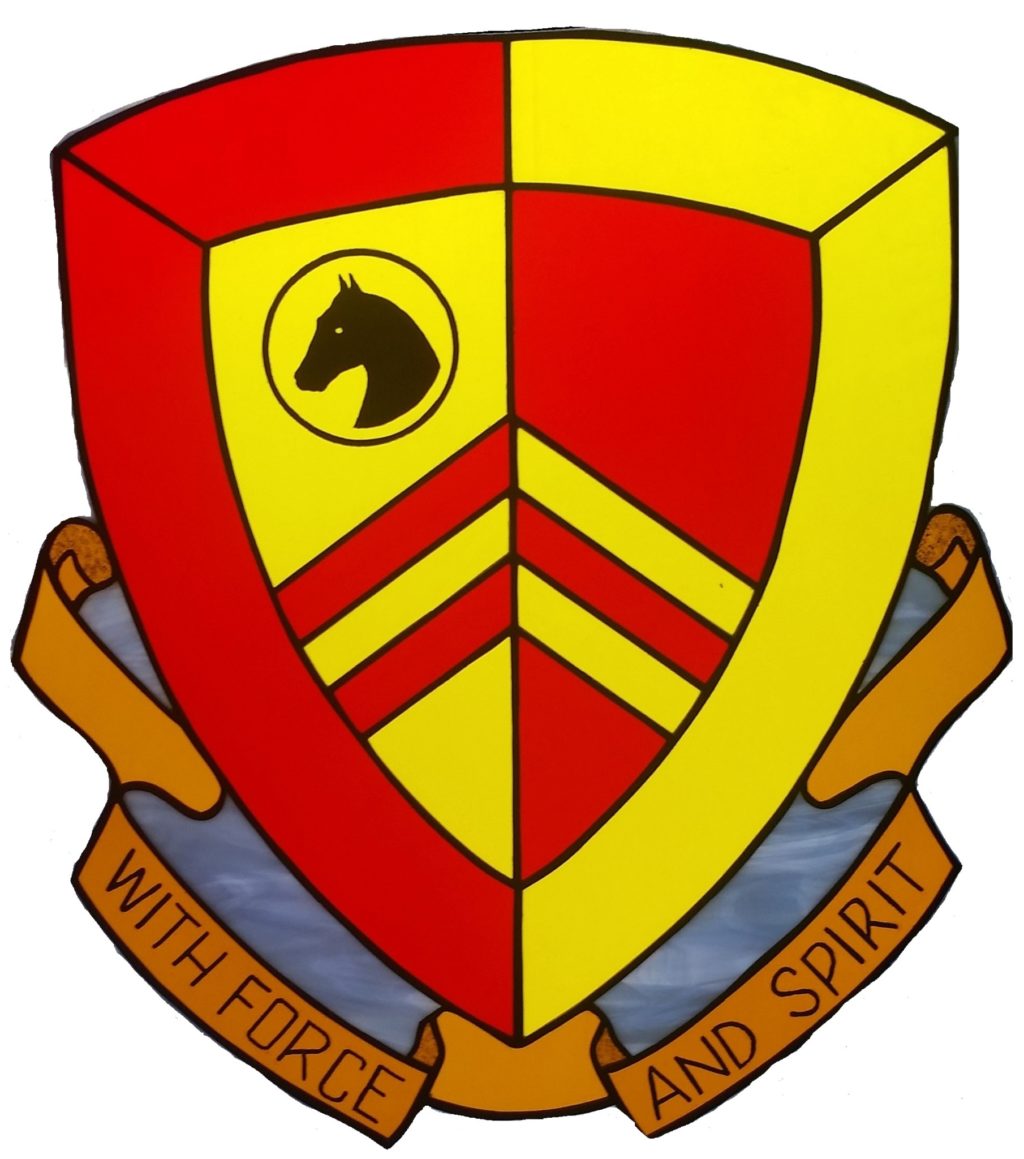 Guard, characterized by a long lineage of service and a relentless combat record during World War II. From its origins as a Milwaukee riding club to its 500-day struggle through the mud and mountains of Italy, the battalion exemplified the resilience of the American citizen-soldier. Equipped with the powerful 155mm “Long Tom” towed howitzer, the 173rd fired over 130,000 rounds, supporting nearly every major offensive from the Volturno River to the Po Valley.
Lineage and Ancestry
The unit’s ancestry dates back to 1898, when Civil War veterans in Milwaukee formed an unofficial honor guard for General Phillip Sheridan. This group became the Light Horse Squadron, a private riding club that eventually transitioned into the 1st Wisconsin Cavalry. Following service on the Mexican Border, the unit was reorganized for World War I as the 120th Field Artillery Regiment, earning five battle streamers in France.
In the interwar years, the unit fluctuated between cavalry and artillery designations, eventually mobilizing for World War II on October 15, 1940, as the 126th Field Artillery Regiment. The modern 173rd Field Artillery Battalion was officially “born” on February 23, 1943, at Camp Gruber, Oklahoma, following the “triangularization” of the 173rd Field Artillery Regiment.
Training and Deployment
The 173th Field Artillery Battalion was created from the Headquarters of the 2nd Battalion 126th Field Artillery Regiment and Batteries D, E, and F that mobilized on October 15, 1940. The unit had been previously reorganized as the 1st Battalion 173rd Field Artillery Regiment between February 1, 1942 and February 23, 1943. During the entire period from mobilization in 1940 until release from active service in 1945 the Battalion was Commanded by LTC Harry T. Ketcham and LTC Earl J Rice.
The battalion’s preparation for combat was rigorous. Under the command of Lieutenant Colonel Harry T. Ketcham, the men endured the “mud, rain and cold” of Camp Beauregard, Louisiana, which they nicknamed “Camp Disregard”. At Camp Gruber, they mastered their new 155mm guns in the rugged Cookson Hills, learning to emplace the massive weapons in seemingly inaccessible locations—a skill that would prove vital in the Apennines.
In August 1943, the battalion entrained for Camp Kilmer, New Jersey, and boarded the U.S.S. Monticello for North Africa. Arriving in Oran, Algeria, on September 2, the men spent several weeks “spitting and polishing” under the 18th Field Artillery Brigade. This period was marked by grueling physical conditioning in rock quarries and a historic 500-kilometer overland march from Oran to Bizerte, Tunisia, which provided the men with their first insights into the chaos and culture of the war-torn Mediterranean.
Entry into Battle: The Winter Line
The 173rd entered combat on December 13, 1943, arriving at the Volturno River near Roccaravindola. The first rounds were fired on December 14, targeted near the town of Cardito. The winter of 1943–1944 was defined by “thin, soupy mud” and grueling mountain positions. At the Rocchetta plateau, the battalion supported the French Moroccan Division’s drive toward Atina.
The conditions were perilous; on December 30, 1943, a German artillery shell struck near “A” Battery’s No. 3 piece, killing three men and shattering the unit’s initial sense of security. Shortly thereafter, a “terrific blizzard” buried the camp, destroying the unit’s liaison planes and forcing the observers to be dragged off the ridges in frozen conditions. Despite these hardships, the battalion fired over 5,800 rounds during its 28-day stand at Rocchetta.
The Road to Rome and the Garlic Cinema
In April 1944, the battalion moved to the Garigliano River plain in sight of Minturno. This flat pastureland was under constant German observation from the Petrella Hillmass, necessitating strict traffic control and deep dugouts. To maintain morale, the men created the “Garlic Cinema”—a movie theater rigged in a barn filled with mounds of garlic.
The “Big Attack” for Rome began at 2300 on May 11, 1944, with an hour-long barrage involving hundreds of guns. The 173rd’s “Long Toms” pounded enemy positions, and in the following days, they participated in a “rat race” up the coast. The Germans retreated so rapidly that the heavy guns often struggled to keep them in range, sometimes moving forward again before they could even register a target. On June 6, 1944, the battalion entered Rome, briefly occupying the Forum Mussolini (Foro Italico) before pushing north.
The Gothic Line and the “Black Rock”
As the Allied armies ground into the North Apennines, the 173rd faced its most difficult tactical challenges. In September 1944, the battalion breached the Gothic Line, earning high praise from Major General Geoffrey Keyes of the II Corps. The terrain was formidable, particularly at the Futa and Radicosa Passes, where the Germans had constructed miles of anti-tank ditches and pillboxes.
One of the most grueling periods occurred at Sambuco, a position known as “that place by the black rock”. The valley was so crammed with artillery that any incoming shell was almost guaranteed to hit a target. Continuous rain turned the valley into a “bottomless” mass of mud, making the battalion’s eventual displacement in October 1944 one of the most difficult feats in its history.
Winter at Quinzano and the Final Push
The battalion spent the winter of 1944–1945 at Quinzano, just south of Bologna. Frozen into their positions, the crews painted their guns white to blend with the snow. During this time, they experimented with the “hush-hush” V-T fuse, which used radar to detonate shells above the ground, and utilized an attached 8-inch howitzer for precision destruction of enemy-held stone houses.
The final offensive began on April 15, 1945. Breaking out into the Po Valley, the battalion transitioned from mountain grinding to a lightning-fast armored pursuit. On April 25, the 173rd crossed the Po River on a pontoon bridge under the threat of Luftwaffe strafing. The advance continued through Vicenza and Castelfranco, with the battalion capturing hundreds of dazed German prisoners who were surrendering in droves.
End of the War and Legacy
The war in Italy ended for the 173rd on the evening of May 2, 1945. The battalion transitioned to managing prisoner-of-war camps at Bassano del Grappa and Verona before being moved to Florence for redeployment.
The combat record of the 173rd Field Artillery Battalion remains staggering:
- Days in Combat: Over 500.
- Rounds Fired: 131,359.
- Casualties: 12 killed in action, 46 wounded.
- Honors: Numerous Silver Stars, Bronze Stars, and the French Croix de Guerre.
By September 1945, the unit had dissolved as its “high point” veterans returned to Wisconsin. The 173rd’s journey from the riding clubs of Milwaukee to the surrender in the Alps stands as a definitive testament to the “On the Target” spirit of the Wisconsin Field Artillery.
Statistics Table: Rounds Fired by Month
| Period | Rounds Fired |
| Dec 1943 | 2,286 |
| Jan 1944 | 9,536 |
| Mar 1944 | 10,561 |
| July 1944 | 15,794 |
| April 1945 | 12,274 |
| Total Combat Rounds | 131,359 |
The Battalion earned the following Campaign credit during WWII:
- Naples – Foggia
- Po Valley
- Rome Arno
- North Apennines
The 173rd Field Artillery Battalion History Map includes the locations where the battalion served in the Mediterranean Theater.
985th Field Artillery Battalion (September 2, 1943 – October 8, 1945)
The 985th Field Artillery Battalion stands as a distinguished heavy artillery unit of the United States Army
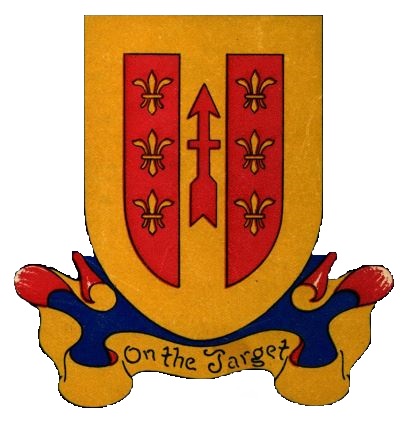
985th FA BN Crest
during World War II, particularly recognized for its relentless service in the Italian Campaign. As a “Long Tom” battalion equipped with the massive 155mm towed howitzers, the unit served 510 days in combat, firing 131,359 rounds against Axis forces. Its history is a narrative of Wisconsin National Guard resilience, transitioning from the mud of Louisiana training camps to the grueling “Purple Heart Valley” of the Fifth Army front.
Lineage and Activation
The 985th Field Artillery Battalion possessed a lineage deeply rooted in the military traditions of the Midwest. As a direct descendant of the 121st Field Artillery Regiment, the battalion inherited honors from the Spanish-American War, the Mexican Border War, and World War I. The unit was officially inducted into Federal service on October 15, 1940, at Milwaukee, Wisconsin, as the 2nd Battalion of the 121st Field Artillery Regiment, under the command of Lieutenant Colonel Kellogg W. “Kelly” Harkins.
Following induction, the battalion underwent a protracted and often grueling training period. It initially moved to Camp Beauregard, Louisiana, where the men spent a winter “floundering in the mud” before transferring to Camp Livingston. The 1941 maneuvers provided the unit’s first taste of simulated warfare, intermingling camaraderie with the harsh realities of chiggers, snakes, and swamp life. In February 1942, as the Army reorganized into “triangular” divisions, the unit was redesignated as the 2nd Battalion of the 173rd Field Artillery Regiment. It was not until the unit moved to Camp Gruber, Oklahoma, in August 1942 that it was finally separated from the regiment to become the independent 985th Field Artillery Battalion.
Equipping the “Long Toms”
It was at Camp Gruber that the battalion received its defining weapon: the 155mm “Long Tom” towed howitzer, which replaced the outmoded GPFs of 1917 vintage. The Long Tom was a masterpiece of heavy ordnance, described by observers as having the size of a locomotive and the reliability of a thoroughbred. Requiring a crew of 15 men and firing projectiles weighing approximately 100 pounds, the weapon earned the sobriquet “Whispering Death” due to the terrifying sound of its shells passing overhead.
The battalion’s training culminated in GHQ tests during the summer of 1943, which the unit passed with “flying colors”. After staging at Camp Kilmer, New Jersey, the 985th boarded the Matson luxury liner Monterey on August 21, 1943. The voyage concluded on September 2, 1943, when the battalion steamed into Oran Harbor, North Africa. The stay in North Africa was characterized by dust, long-drilled flies, and conditioning hikes, but it served as the final preparation for the invasion of the European continent.
The Italian Campaign: Bagnoli to Picilli
On October 28, 1943, the 985th Field Artillery Battalion landed at Bagnoli Harbor, Naples, under the shadow of Mount Vesuvius. The transition to combat was swift. On November 17, under the cover of darkness, the battalion moved into position near Picilli amid overwhelming rain and mud. The following day, November 18, 1943, the battalion fired its first rounds into “Krautland,” initiating a combat record that would rarely see a pause until the end of the war.
Early operations were defined by the difficult terrain and the introduction to German counter-battery fire. In the area near Mignano, known to the men as “Stuka Alley,” the battalion experienced its first casualties, including Corporal Raymond Clark, who was injured while laying wire, and Corporal McCarthy, the first member of the battalion killed in action. It was during these early winter months that the cannoneers learned the vital difference between incoming and outgoing shells, developing a habit of “digging deep” for survival.
The 125-Day Stand at Cassino
The high point of the battalion’s service was the grueling 125-day stand along Highway 6 before Cassino. Stationed in the shadow of Mount Trocchio, the 985th was positioned in what became known as “Purple Heart Valley” or “Purple Heart Alley”. German observers on Mount Cairo had direct observation of the battery positions, leading to frequent and intense artillery concentrations, sometimes reaching 300 rounds of 170mm shells in a single battery area.
Life at Cassino was a constant struggle against nightly air raids and observed fire. Despite this, the 985th “dished it out” as well as it took it, utilizing ground observation from Mount Trocchio and Cub plane observation to fire more than 45,000 shells into German positions. One of the unit’s most famous achievements occurred during the Esperia traffic jam, where an artillery observer adjusted every “Long Tom” in the battalion onto a mass of German traffic attempting to escape the Garigliano Valley. In a few hours, the battalion fired more than 1,600 shells, destroying several tanks, big artillery pieces, and numerous vehicles. This mission was so effective it was later featured in Life magazine as a premier example of American artillery prowess.
Life in the FDC and the Human Element
The 985th’s operational success was driven by its Fire Direction Center (FDC), which served as the battalion’s nerve center. During the Cassino campaign, the FDC was often located in the cellars of ruined farmhouses, utilizing school desks salvaged from nearby ruins. The personnel, largely from Milwaukee, employed complex mathematics to account for variables such as wind speed, air density, and even the earth’s rotation—calculating that the world would turn fifty yards under a shell’s path over its fourteen-mile journey.
Margaret Bourke-White, the renowned Life photographer, spent significant time with the battalion during this period, capturing the descriptive reality of their environment. She famously recorded the “Superman” battery (Able Battery) in action and described the surreal atmosphere of the battalion’s headquarters in a pink farmhouse near Cassino. The farmhouse featured a charcoal mural of Nazi home life, known as the “Family Willms,” left behind by retreating Germans, which served as a backdrop for the battalion’s Hostile Battery Historical File—a meticulous record of every known enemy gun position.
The Drive to Rome and the Gothic Line
On May 11, 1944, the 985th participated in the massive artillery barrage that signaled the start of the big push to crack the Gustav Line. Following the fall of Cassino on May 18, the battalion joined the “Rat Race” toward Rome. During this advance, the battalion roved through seven different Corps, supporting seven divisions and three Ranger battalions. The unit passed through the liberated capital of Rome on June 12, 1944, cheered by the inhabitants.
The advance continued across the Arno River and into the high mountains of the Gothic Line. The battalion’s second winter in Italy was spent in the Appenines at Roncastaldo and Anconella, where the cannoneers faced snow and ice rather than the mud of the previous year. During this period, elements of the battalion were assigned to an 8-inch howitzer to provide extra power against German fortifications, lobbing over a thousand rounds into enemy territory.
The specialized sections: Air OP and Medics
The battalion’s effectiveness was significantly enhanced by its specialized sections. The Air OP section, consisting of “Grasshopper” pilots and observers, flew 583 combat missions against the enemy in Italy, totaling over 1,027 hours in the air. These pilots flew routine patrols and reconnaissance even under enemy fire, suffering no loss of aircraft despite returning with holes in the fabric from German anti-aircraft fire.
The Medical Detachment also faced extreme conditions, maintaining a 30% casualty rate—one of the highest for any artillery medical detachment overseas. Their heroism was exemplified by men like Corporal Bernard Seneski, who was awarded the Bronze Star and Purple Heart after entering a minefield to rescue a fellow soldier, losing use of both legs in the process. Other medics, such as Corporal John McCarthy, were killed at their posts during the intense shellings at Cassino.
The Po Valley and Final Victory
The spring offensive of 1945 saw the 985th break into the Po Valley in a spectacular seven-day sweep covering 146 miles. During this final push, the battalion supported the 91st Division combat team, capturing numerous prisoners and wreckage from retreating German convoys. The final 60 rounds fired by the battalion at Carmignano di Brenta in early May 1945 are believed to be the last artillery rounds fired in the entire Corps.
On May 2, 1945, the battalion received the joyous news of the unconditional surrender of German forces in Italy. By VE Day, the 985th was at Bassano di Grappa, guarding prisoners of war and celebrating the end of hostilities with “beaucoups beer” from a local brewery.
Leadership and Legacy
The success and cohesion of the 985th Field Artillery Battalion were widely attributed to the leadership of Lieutenant Colonel Kellogg Harkins. Harkins commanded the respect and confidence of his men throughout the unit’s existence, ensuring the battalion functioned smoothly under even the most adverse conditions. In recognition of its service, the battalion was awarded the French Croix de Guerre with star for its support of the French Expeditionary Force during the drive on Rome.
In total, the 985th Field Artillery Battalion participated in four major campaigns of World War II. Beyond the statistics of 131,359 rounds and 510 days of combat, the unit’s legacy is defined by the “bond of eternal fellowship” formed among its citizen-soldiers from Wisconsin and the sacrifice of those who did not return from the valleys and mountains of Italy.
The Battalion earned the following Campaign credit during WWII:
- Naples – Foggia
- Po Valley
- Rome Arno
- North Apennines
The 985th Field Artillery History Map includes the locations where the battalion served in the Mediterranean Theater.
Commanders
The table below contains the Regimental, Group, and Battalion Commanders from the units whose World War II lineage has been inherited by the 121st Field Artillery Regiment.
| ERA | TO | FROM | UNIT | NAME |
|---|---|---|---|---|
| WWII | October 15, 1940 | February 1, 1942 | 121st Field Artillery Regiment | COL Waldemar F. Breidster |
| WWII | October 15, 1940 | UKN (1941) | 1/121st Field Artillery Regiment | LTC John C. Fritschler |
| WWII | October 15, 1940 | February 1, 1942 | 2/121st Field Artillery Regiment | LTC Kellogg W. Harkins |
| WWII | UKN (1941) | February 1, 1942 | 1/121st Field Artillery Regiment | LTC Henry J. Lurquin |
| WWII | February 1, 1942 | UKN | 121st Field Artillery Battalion | LTC Melvin L. McCreary |
| WWII | February 2, 1942 | February 23, 1943 | 1/173rd Field Artillery Regiment | LTC Harry T. Ketcham |
| WWII | February 2, 1942 | February 25,1943 | 173rd Field Artillery Regiment | COL Waldemar F. Breidster |
| WWII | February 2, 1942 | February 23, 1943 | 2/173rd Field Artillery Regiment | LTC Kellogg W. Harkins |
| WWII | February 23, 1943 | September 23, 1944 | 173rd Field Artillery Battalion | LTC Harry T. Ketcham |
| WWII | February 23, 1943 | October 8, 1945 | 985th Field Artillery Battalion | LTC Kellogg W. Harkins |
| WWII | February 25, 1943 | August 10, 1943 | 173rd Field Artillery Group | COL Waldemar F. Breidster |
| WWII | August 10, 1943 | October 5, 1943 | 173rd Field Artillery Group | LTC Edward A. Bolzendahl |
| WWII | UKN | February 7, 1944 | 121st Field Artillery Battalion | MAJ Earl R. Kindig |
| WWII | UKN (1944) | UKN (1944) | 121st Field Artillery Battalion | LTC Arthur E. Solem |
| WWII | UKN (1944) | September 24, 1945 | 121st Field Artillery Battalion | LTC John B. Taylor |
| WWII | October 5, 1943 | May 8, 1945 | 173rd Field Artillery Group | COL Wilbur S. Nye |
| WWII | September 23,1944 | September 11, 1945 | 173rd Field Artillery Battalion | LTC Earl J. Rice |
| WWII | September 24, 1945 | February 28, 1946 | 121st Field Artillery Battalion | LTC Clarence E. Seipel |
War Dead
The table below contains the Regimental Soldiers Killed in Action, Died of Wounds, or Died of Disease during World War II.
| NAME | RANK | DATE | UNIT | HOME OF RECORD | REFERENCES |
|---|---|---|---|---|---|
| Antos, Philip | TSGT5 | August 25, 1945 | 121st FA Battalion | New York | www.abmc.gov |
| Buckmore, Robert E. | PVT | January 20, 1944 | A/985th FA Battalion | Kennebec County, Maine | 985th FA BN Virtual Cemetery On the Target, 2. www.abmc.gov |
| Burke, Clarence B. | PVT | December 10, 1944 | 173rd FA Battalion | Florida | 173rd FA BN Virtual Cemetery Burns, 52 www.abmc.gov |
| Cowen, Dennis C. | PFC | April 8, 1944 | C/173rd FA Battalion | Jefferson County, Wisconsin | Burns, 29. |
| Decker, Raymond L. | PVT | December 28, 1944 | C/173rd FA Battalion | Connecticut | www.abmc.gov |
| DiBartolo, Guido D. | PVT | April 21, 1944 | B/985th FA Battalion | Illinois | 985th FA BN Virtual Cemetery On the Target, 2. www.abmc.gov |
| Dubinski, Mike D. | SSG | February 11, 1944 | B/985th FA Battalion | Milwaukee, WI | 985th FA BN Virtual Cemetery On the Target, 2, 17. |
| Duncan, George, H. | 985th FA Battalion | On the Target, 2. | |||
| Earnhart, William | PFC | April 27, 1944 | C/173rd FA Battalion | Coleman County, TX | Burns, 29. |
| Edwards, Howard L. | CPL | February 5, 1944 | HHB/985th FA Battalion | Wisconsin | 985th FA BN Virtual Cemetery On the Target, 2, 10. www.abmc.gov On the Target, 2, 10. |
| Harsh, Clifford G. | SGT | April 23, 1945 | 985th FA Battalion | Milwaukee, WI | 985th FA BN Virtual Cemetery On the Target, 2, 10. |
| Hershberger, Willard | PVT | 1944 | A/985th FA Battalion | Maryland | 985th FA BN Virtual Cemetery On the Target, 2, 16. |
| Hess, Elmer E. | CPL | January 26, 1944 | B/985th FA Battalion | Milwaukee County, Wisconsin | 985th FA BN Virtual Cemetery On the Target, 2. www.abmc.gov |
| Kelley, Walter W. | PFC | February 16, 1945 | 173rd FA Battalion | Oconne County, South Carolina | www.abmc.gov |
| Kenter, William E | PFC | January, 1944 | B/985th FA Battalion | Oneida, NY | Makal, 37. On the Target, 47. |
| Kindig, Earl R. | MAJ | February 7, 1944 | HQ/121st FA Battalion | Iowa | www.abmc.gov |
| Krzoski, Frank | SSG | February 2, 1944 | B/985th FA Battalion | Milwaukee, WI | 985th FA BN Virtual Cemetery On the Target, 2, 17. |
| LaPage, Vernon F. | PVT | June 12, 1944 | B/121st FA Battalion | Green Bay, WI | www.abmc.gov |
| Leone, Joseph A. | CPL | January 3, 1945 | 985th FA Battalion | Allegheny County, Pennsylvania | 985th FA BN Virtual Cemetery On the Target, 2, 21. |
| Martin, Phillip A. | PFC | October 8, 1944 | C/985th FA Battalion | Wisconsin | 985th FA BN Virtual Cemetery On the Target, 2. www.abmc.gov |
| McCarthy, John | CPL | November 21, 1943 | Medical Detachment, 985th FA Battalion | Makal, 32. On the Target, 2, 24. |
|
| McGoldrick, Clifford M. | CPL | January 20, 1944 | A/985th FA Battalion | Pennsylvania | 985th FA BN Virtual Cemetery On the Target, 2, 16. |
| McKnight, Eugene | PFC | May 19, 1945 | C/121st FA Battalion | Six Mile Run, Pennsylvania | www.abmc.gov |
| Messer, Virgil | PVT | January, 1944 | B/985th FA Battalion | Lockland, Ohio | Makal, 37. On the Target, 56. |
| Miller, Fred, C. | PVT | A/985th FA Battalion | Ohio | On the Target, 2, 16. | |
| Mills, Gerald | PFC | March 1, 1944 | C/173rd FA Battalion | Washington County, Ohio | 173rd FA BN Virtual Cemetery Burns, 16 |
| Pieper, Henry W. | CPL | November 10, 1944 | 173rd FA Battalion | Calumet, Wisconsin | www.abmc.gov |
| Piotrowski, Francis J. | 2LT | February 7, 1944 | 121st FA Battalion | Michigan | www.abmc.gov |
| Rutkowski, Martin C. | PVT | November 12, 1944 | B/985th FA Battalion | Pennsylvania | 985th FA BN Virtual Cemetery On the Target, 2. www.abmc.gov |
| Stevens, Kelmer | PVT | November 12, 1944 | B/985th FA Battalion | Arkansas | 985th FA BN Virtual Cemetery On the Target, 2, 18. Makal, 53. |
| Tourocke, Edward H. | PFC | January, 1944 | C/985th FA Battalion | Providence, RI | Makal, 37. On the Target, 2, 20. |
| Wilson, Ernest C. | PVT | A/985th FA Battalion | Pennsylvania | On the Target, 2, 16. |
References
- 121st Field Artillery Battalion: A Virtual Cemetery. (n.d.). Retrieved from https://www.findagrave.com/virtual-cemetery/961403
- 173rd Field Artillery Battalion: A Virtual Cemetery. (n.d.), Retrieved from https://www.findagrave.com/virtual-cemetery/961394
- 985th Field Artillery Battalion: A Virtual Cemetery, (n.d.), Retrieved from https://www.findagrave.com/virtual-cemetery/961395
- Beilfuss, Matthew, P., Presentation: Wisconsin Field Artillery in WWII, 2022 St. Barbara’s Day Event, Milwaukee, WI, February 19, 2022.
- Bourke-White, Margaret. “Purple Heart Valley”: A Combat Chronicle of the War in Italy. New York: Simon and Schuster, 1944. Print.
- Burns, Benton H. History 173rd Field Artillery Battalion. Place of publication not identified: publisher not identified, 1945. Print.
- History of the Biak Operation.
- Makal, Thomas J. Mr. National Guard: A Civilian Soldier. United States?: T.J. Makal, 2002. Print.
- Operation BIAK (May 44 – Sept 44). 1944. US Army Reports, 121st FA Battalion.
- Operation SAIDOR (Jan 44 – Mar 44). 1944. US Army Reports, 121st FA Battalion.
- United States. 1945. On the target. Milano [Italy]: O De-Magistris Cartotecnica.].
- United States. 1945. Utah Beach to Salzburg with the 173 Field Artillery Group. [Place of publication not identified]: [publisher not identified].
- www.abmc.gov (search terms, 121st Field Artillery Battalion, 173rd Field Artillery Battalion, 985th Field Artillery Battalion & WWII)