“The World War demonstrated the importance of Field Artillery. The majority of casualties were inflicted by the arm.”
Gen John J. Pershing
Creation of the 121st Field Artillery Regiment
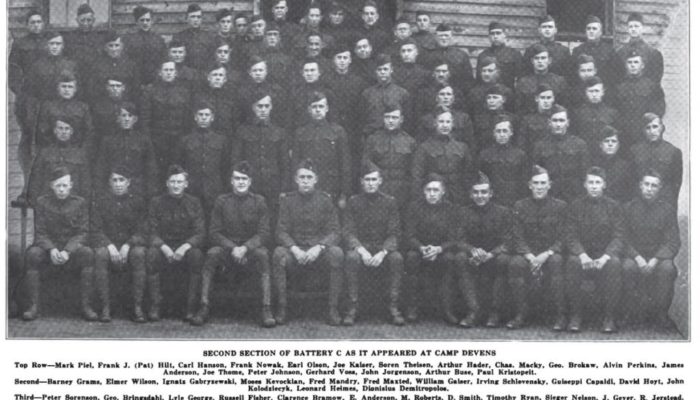
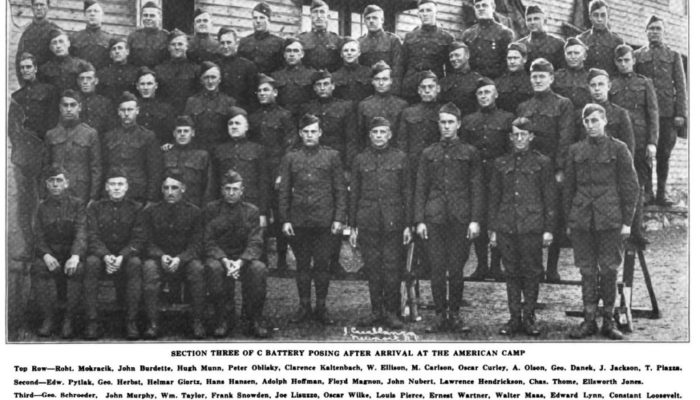
The lineage of the 121st Field Artillery Regiment rapidly grew from Battery A of Milwaukee, which had existed since the Spanish-American War. The regiment’s modern formation began in 1916 during the Mexican Border crisis when the Wisconsin National Guard was ordered to Texas for maneuvers. At this time, Captain Philip C. Westfahl was tasked with expanding the existing Milwaukee unit into a battalion of three batteries. This led to the creation of Battery B in Green Bay and Battery C in Racine. Although the Racine and Green Bay units were initially left behind during the border service due to a lack of equipment, many of their members were attached to Battery A during its time in Texas.
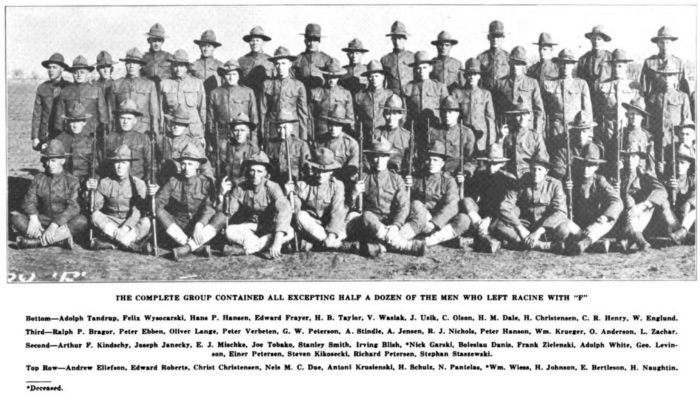
When the United States entered World War I in April 1917, the War Department ordered the battalion to expand into a full regiment. New batteries—D, E, and F—were recruited from the same cities: Milwaukee, Green Bay, and Racine. Battery F, recruited exclusively in Racine, was composed entirely of volunteers who enlisted after the declaration of war. By July 1917, the regiment had reached a strength of approximately 1,300 officers and men under the command of Colonel Westfahl.
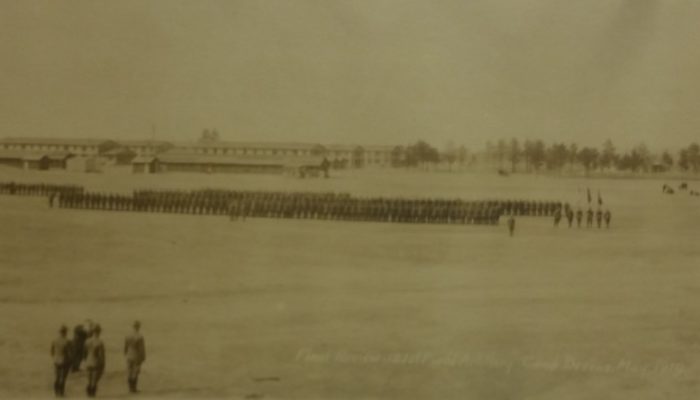
The regiment mobilized at Camp Douglas, Wisconsin, on July 2, 1917. The early days of training were marked by a lack of equipment; the entire regiment possessed only eight 3-inch guns, meaning the artillerymen spent much of their time on infantry drills and foot marches. One notable practice hike involved a 15-mile march over sandy roads at a pace of four miles per hour with full packs. It was during this period that the regiment was officially mustered into federal service on July 15 and 16, 1917.
Training at Camp MacArthur and Overseas Movement
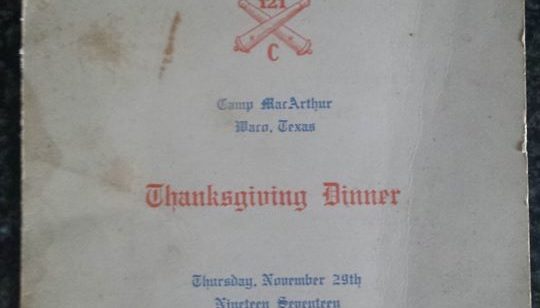
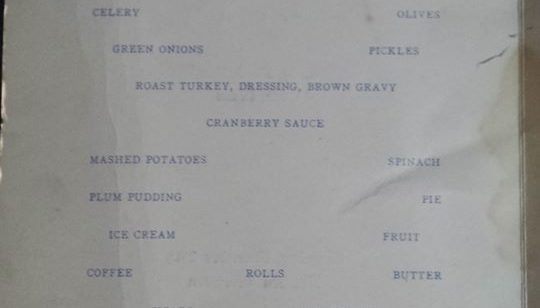
In September 1917, the regiment transferred to Camp MacArthur near Waco, Texas. Here, the men endured blistering heat and frequent sandstorms while perfecting their craft. Training became more sophisticated, encompassing equitation, trench construction, and wireless signaling. In December, the regiment conducted its first live-fire practice at the China Springs range, 20 miles from camp. By the end of their stay in Texas, the men were hardened and physically prepared for overseas service, though they still faced uncertainty regarding their final equipment, oscillating between light 3-inch guns and heavy 6-inch howitzers.
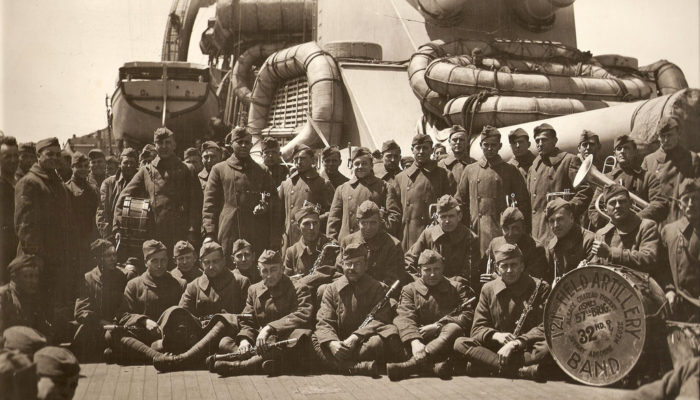
On February 5, 1918, the 121st entrained for Camp Merritt, New Jersey. After a brief stay—marred only by a minor epidemic of measles and scarlet fever—the regiment marched to Hoboken and filed aboard the U.S.S. Leviathan (formerly the German liner Vaterland) on March 3. The voyage was tense, highlighted by a torpedo scare on March 11 while passing through the danger zone off the coast of Ireland. Theodore “Ted” Beach, a corporal in Battery F, noted in his diary that the ship lurched so violently while changing course to avoid a torpedo that mess tables slid across the floor.
The regiment arrived in Liverpool on March 12 and moved to “Winnal Downs” (nicknamed “Dwindle Down” by the men due to the slim rations of bread and cheese) near Winchester, England. They eventually crossed the English Channel to Le Havre, France, where they boarded the famous “40 Hommes, 8 Cheveaux” boxcars for a 30-hour journey to their final training station: Camp de Coetquidan.
Tactical Specialization at Coetquidan
At Coetquidan, the 121st was officially designated as a heavy field artillery regiment and equipped with French 155mm Schneider howitzers. Each battery was issued four guns, which were horse-drawn and required nearly 100 horses apiece. The training was rigorous, with French instructors teaching the Americans map-making, mechanics, and advanced ballistics. The 155mm howitzer was a versatile weapon, capable of firing two types of 6-inch shells: a light, sharp-nosed shell for long-range interdiction (up to 11,000 meters) and a heavy projectile designed for destroying fortifications.
During this period, Battery C and Battery E were detached from the regiment to serve as firing units for various officer and aviation schools at Veauxhalles and Saumur. Battery C would not rejoin the regiment until after the Armistice, having spent nine months training 388 aeroplane observers and 200 artillery officers. Consequently, the 121st entered combat with only four of its six batteries (A, B, D, and F).
Combat in the Alsace and Aisne-Marne Offensives
The regiment entered the front lines in the Alsace sector on June 11, 1918. This was considered a “quiet” sector where French and German forces maintained a relatively stationary front. For the 121st, Alsace served as a valuable initiation to modern warfare, allowing the men to experience shellfire, gas attacks, and aerial observation in a controlled environment. On June 30, the regiment participated in its first major coup de main, laying down an intensive one-hour barrage to support an infantry raid.
In late July, the regiment was rushed to the Chateau-Thierry area to participate in the Aisne-Marne offensive. The move was accomplished through a remarkable 92-mile forced march conducted over four nights, a feat completed without losing a single man or horse. Arriving at the front, the men were met with the gruesome reality of the war: fields strewn with discarded equipment, dead horses, and unburied bodies.
By early August, the regiment was established in “Death Valley” near Chery-Chartreuve, south of the Vesle River. This position became one of the most grueling for the artillerymen, as they were subjected to daily shelling and frequent mustard gas bombardments. On August 6, the regiment delivered an exceptionally accurate destructive fire on the village of Fismette, wiping out 50 machine gun nests and enabling the 32nd Division’s infantry to cross the river. The cost was high; in just ten days in Death Valley, Battery D alone lost 45 horses to shellfire.
Juvigny and the Meuse-Argonne Offensive
On August 23, the 121st was moved north of Soissons to support the French Moroccan Division in an attack on Juvigny. The terrain was treacherous, and the batteries often found themselves within a few hundred feet of the front infantry lines due to sudden tactical shifts. During the advance toward Bagneaux, Batteries D and F were attacked by German aircraft and shelled so intensely that one man was killed and 16 were injured in a single afternoon. Despite these conditions, the artillery provided a “perfectly adjusted barrage” that allowed the infantry to capture Juvigny. This performance earned the 32nd Division the nickname “Les Terribles” from the French command.
The final phase of the regiment’s combat service occurred during the Meuse-Argonne offensive beginning September 26, 1918. Supporting the 79th Division, the 121st participated in the surprise attack that shattered the supposedly “impregnable” German defenses around the towering hill of Montfaucon. The conditions were abysmal; the men worked in deep mud and fog, harassed by long-range artillery and swarms of “cooties” (lice). Ted Beach’s diary records the exhaustion of the men, noting that by November 1, the regiment had advanced 11 kilometers, but the number of available horses had dwindled so far that further rapid advances were nearly impossible.
The Armistice and Homecoming
The 121st was withdrawn to reserve positions near Bussy on November 5, 1918, to be motorized. It was en route to this new assignment when the Armistice was signed on November 11. While the 32nd Division infantry marched into Germany as part of the Army of Occupation, the 121st remained in France for several months to receive new motor equipment and conduct maneuvers with the 88th Division.
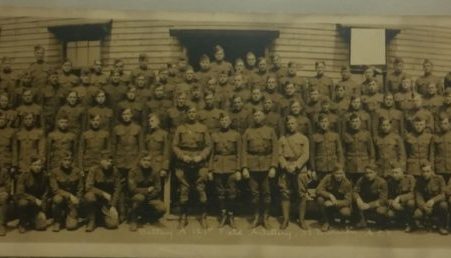
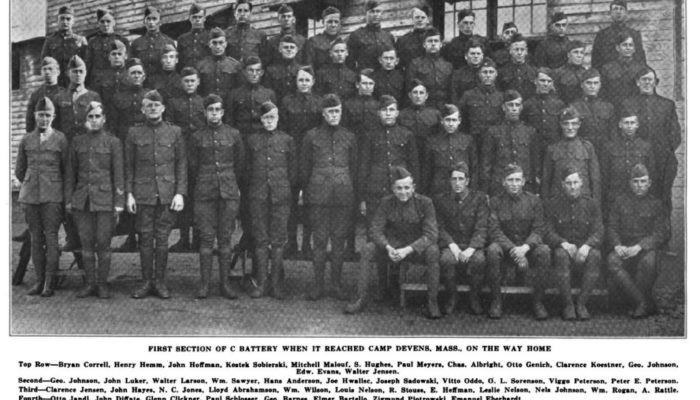
The regiment finally departed for home in April 1919. Battery F and other units sailed from Brest on April 30 aboard the U.S.S. Georgia, arriving in Boston on May 12. The regiment was formally mustered out at Camp Grant, Illinois, on May 19, 1919, before returning to a hero’s welcome in Wisconsin. The 121st Field Artillery had fired over 10,000 shells against the enemy, accomplished every mission assigned to it, and emerged as a distinguished heavy artillery unit in the American Expeditionary Forces.
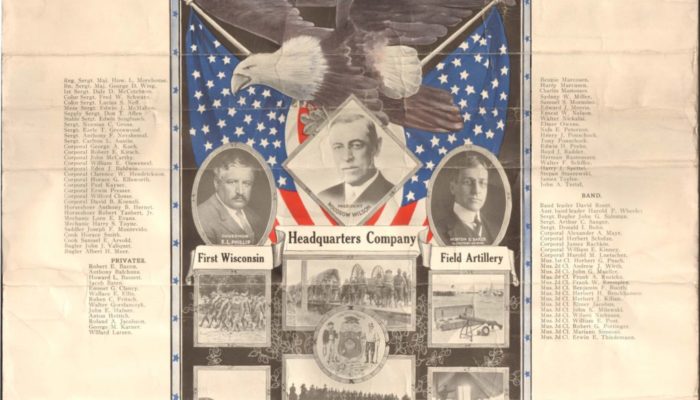 Our Country's Call to Arms, First Wisconsin Field Artillery, July 15, 1917
Commanders
| TO | FROM | UNIT | NAME |
|---|---|---|---|
| 1916 | July 15, 1917 | 1st Field Artillery | MAJ Phillip C. Westfahl |
| July 15, 1917 | September 18, 1917 | First Wisconsin Field Artillery | COL Phillip C. Westfahl |
| September 19, 1917 | July 1918 | 121st Field Artillery Regiment | COL Phillip C. Westfahl |
| July 1918 | November 1918 | 121st Field Artillery Regiment | COL Robert Arthur |
| November 1918 | April 1919 | 121st Field Artillery Regiment | COL James A. Thomas |
| April 1919 | May 17, 1919 | 121st Field Artillery Regiment | COL Phillip C. Westfahl |
War Dead
| NAME | RANK | UNIT | HOME OF RECORD | DATE OF DEATH | CAUSE OF DEATH | REFERENCES |
|---|---|---|---|---|---|---|
| Beuttemiller George F. | PVT | December 11, 1918 | Died of Disease | 121st FA: Virtual Cemetery 57th FA BDE WWI, 112 Reunion Souvenir, 29 |
||
| Bixby, Menzo J. | Bugler | F/121st FA Regiment | Union Grove, Wisconsin | March 7, 1918 | Died of Disease | 121st FA: Virtual Cemetery 32D WWI Honor Roll Reunion Souvenir, 29 |
| Blansezeuski, UKN | CPL | Reunion Souvenir, 28 | ||||
| Brind, Albert Wilson | PVT | A/121st FA Regiment | Paterson, New Jersey | December 8, 1918 | Died of Disease | 121st FA: Virtual Cemetery 57th FA BDE WWI, 112 Reunion Souvenir, 29 |
| Burckle, Erven | PVT | B/121st FA Regiment | DePere, Wisconsin | February 9, 1918 | Died of Disease | 121st FA: Virtual Cemetery 32D WWI Honor Roll |
| Carpenter, Thaddeus Caleb | PVT | Hickory, North Carolina | October 28, 1918 | Died of Wounds | 121st FA: Virtual Cemetery WWI ABMC 121st FA |
|
| Caselline, Guerino | PVT | F/121st FA Regiment | Barre, Vermont | January 20, 1919 | Died of Disease | 121st FA: Virtual Cemetery 57th FA BDE WWI, 112 Reunion Souvenir, 29 WWI ABMC 121st FA |
| Chiurri, Enricho | PVT | F/121st FA Regiment | Leominster, Massachusetts | January 20, 1919 | Died of Disease | 57th FA BDE WWI, 112 Haight, 244 Reunion Souvenir, 29 |
| Cologne, Julius | PVT | A/121st FA Regiment | Green Bay, Wisconsin | December 28, 1918 | Died of Disease | 121st FA: Virtual Cemetery 32D WWI Honor Roll 57th FA BDE WWI, 112 Reunion Souvenir, 29 WI Vets Museum WWI |
| Delorme, Thomas E. | CPL | B/121st FA Regiment | New London, Wisconsin | September 14, 1918 | Died of Wounds | 121st FA: Virtual Cemetery 57th FA BDE WWI, 112 WWI ABMC 121st FA |
| Duane, Mark L. | PFC | D/121st FA Regiment | Mellen, Wisconsin | August 5, 1918 | Killed in Action | 121st FA: Virtual Cemetery 57th FA BDE WWI, 28,111 Reunion Souvenir, 28 WI Goldstar list, 15 WWI ABMC 121st FA |
| Erskine, Lester Dewey | PVT | HQ/121st FA Regiment | Jacksonport, WI | April 30, 1918 | Died of Disease | 121st FA: Virtual Cemetery 32D WWI Honor Roll 57th FA BDE WWI, 112 Reunion Souvenir, 29 |
| Evans, Gilbert O. | PVT | F/121st FA Regiment | Racine, Wisconsin | March 25, 1918 | Died of Disease | 121st FA: Virtual Cemetery 32D WWI Honor Roll 57th FA BDE WWI, 112 Reunion Souvenir, 29 |
| Foley, James W. | PVT | December 9, 1918 | Died of Disease | 57th FA BDE WWI, 112 Reunion Souvenir, 29 |
||
| Galvin, John L. | PVT | A/121st FA Regiment | Cottage Grove, Wisconsin | August 11, 1918 | Killed in Action | 121st FA: Virtual Cemetery 32D Divison WWI, 243 Reunion Souvenir, 28 WI Goldstar, 37 |
| Garski, Nick L. | PFC | F/121st FA Regiment | Racine, Wisconsin | October 3, 1918 | Killed in Action | 121st FA: Virtual Cemetery Beach, 33-34 Haight, 242 Reunion Souvenir, 28 WWI ABMC 121st FA |
| Gatza, Frank | PVT | B/121st FA Regiment | Menasha, Wisconsin | October 9, 1918 | Died of Wounds | 121st FA: Virtual Cemetery 57th FA BDE WWI, 112 WWI ABMC 121st FA |
| Gervais, Charles P. | PVT | D/121st FA Regiment | New Orleans, Louisiana | December 8, 1918 | Died of Disease | 121st FA: Virtual Cemetery 57th FA BDE WWI,112 Reunion Souvenir, 29 |
| Hagan, John J. | PVT | HQ/121st FA Regiment | New York , New York | October 27, 1918 | Killed in Action | 121st FA: Virtual Cemetery 57th FA BDE WWI, 112 WWI ABMC 121st FA |
| Hanson, Carl E. | PVT | F/121st FA Regiment | Norway, Wisconsin | November 29, 1917 | Died in Accident | 121st FA: Virtual Cemetery 32D WWI Honor Roll Haight, 244 Reunion Souvenir, 29 |
| Heffron, Peter J. | PVT | A/121st FA Regiment | Milwaukee, Wisconsin | August 28, 1918 | Died of Wounds | 32D Division WWI, 248 57th FA BDE WWI,112 Reunion Souvenir, 28 |
| Hutcheson, Clarence E. | PVT | HQ/121st FA Regiment | Bentonville, Arkansas | August 1, 1918 | Killed in Action | 121st FA: Virtual Cemetery 32D Division WWI, 250 Reunion Souvenir, 15, 28 |
| Israel, Alfred H. | CPL | E/121st FA Regiment | Green Bay, Wisconsin | March 15, 1918 | Died of Disease | 121st FA: Virtual Cemetery Reunion Souvenir, 29 WI Goldstar List, 22, 93 WI Vets Museum WWI |
| Jacobsen, Peter, E. | PVT | F/121st FA Regiment | Racine, Wisconsin | November 16, 1918 | Died of Disease | 32D WWI Honor Roll WI Vets Museum WWI WWI ABMC 121st FA |
| Jankowski, Leo | PVT | A/121st FA Regiment | Hiles, Wisconsin | October 31, 1918 | Killed in Action | 121st FA: Virtual Cemetery 57th FA BDE WWI, 112 WWI ABMC 121st FA |
| Jensen, Nels Albert | PVT | Menasha (Draper), Wisconsin | April 2, 1918 | Died of Disease | 32D WWI Honor Roll | |
| Kister, Harold T. | CPL | F/121st FA Regiment | Racine, Wisconsin | August 30, 1918 | Killed in Action | 121st FA: Virtual Cemetery 57th FA BDE WWI, 112 Beach, 19 Haight, 240 Reunion Souvenir, 28 |
| Kunz, William C. | PVT | E/121st FA Regiment | Green Bay, Wisconsin | September 9, 1918 | Died of Accident | 121st FA: Virtual Cemetery 57th FA BDE WWI, 112 Reunion Souvenir, 29 WI Vets Museum WWI |
| Maroney, Clarence L. | PVT | F/121st FA Regiment | January 6, 1919 | Died of Disease | 57th FA BDE WWI,112 Haight, 244 Reunion Souvenir, 29 |
|
| Mathison, Peter J. | CPL | B/121st FA Regiment | Stoughton, Wisconsin | October 20, 1917 | Died of Disease | 121st FA: Virtual Cemetery 32D WWI Honor Roll WI Vets Museum WWI |
| McDonald, Edward T. | PVT | January 24, 1919 | Died of Disease | 57th FA BDE WWI, 112 Reunion Souvenir, 29 |
||
| McGough, Nelson | PVT | January 22, 1919 | Died of Disease | 57th FA BDE WWI, 112 Reunion Souvenir, 29 |
||
| Mueller, Arthur J. | CPL | D/121st FA Regiment | Milwaukee, Wisconsin | October 5, 1918 | Died of Wounds | 121st FA: Virtual Cemetery 32D Division WWI, 267 57th FA BDE WWI, 112 Reunion Souvenir, 29 WI Goldstar List, 98 |
| Osier, Guy | PVT | B/121st FA Regiment | Green Bay, Wisconsin | February 6, 1918 | Died of Disease | 32D WWI Honor Roll WI Vets Museum WWI |
| Pamperin, Carl F. | PVT | E/121st FA Regiment | Green Bay, Wisconsin | February 1, 1918 | Died of Disease | 121st FA: Virtual Cemetery Reunion Souvenir, 29 |
| Poquette, Paul A. | PVT | E/121st FA Regiment | Green Bay, Wisconsin | August 17, 1918 | Died of Disease | 121st FA: Virtual Cemetery 32D WWI Honor Roll 57th FA BDE WWI, 113 Reunion Souvenir, 29 |
| Rodgerson, James S. | PVT | D/121st FA Regiment | Mellen, WIsconsin | February 14, 1919 | Died of Disease | 32D WI Honor Roll 57th FA BDE WWI, 113 Reunion Souvenir, 29 WI Vets Museum WWI |
| Schram, Elmore Edward | PVT | D/121st FA Regiment | Baraboo, Wisconsin | August 11, 1918 | Died of Wounds | 121st FA: Virtual Cemetery 32D DIV WWI 57th FA BDE WWI, 112 Reunion Souvenir, 28 |
| Shanks, Elmer F. | PFC | D/121st FA Regiment | Ashland, Wisconsin | August 1, 1918 | Killed in Action | 121st FA: Virtual Cemetery 32D WWI Honor Roll WI Goldstar, 17 |
| Sinnott, Raymond, J. | PVT | A/121st FA Regiment | Milwaukee, Wisconsin | October 3, 1918 | Died of Wounds | 32D Division Honor Roll 57th FA BDE WWI, 112 Reunion Souvenir, 29 |
| Slade, John Paul | 2LT | D/121st FA Regiment | Clay Center, Kansas | September 17, 1918 | Died of Disease | 121st FA: Virtual Cemetery 32D Division WWI Roll of Honor Reunion Souvenir, 29 |
| Smatko, Michael J. | PFC | Pennsylvania | January 3, 1919 | 121st FA: Virtual Cemetery WWI ABMC 121st FA |
||
| Smith, Harold | PVT | October 16, 1918 | Died of Wounds | Reunion Souvenir, 29 57th FA BDE WWI,112 |
||
| Stever, Helmet | PVT | D/121st FA Regiment | Mellen, Wisconsin | August 5, 1918 | Killed in Action | 121st FA: Virtual Cemetery 57th FA BDE WWI, 28 Reunion Souvenir, WI Goldstar, 17 WI Vets Museum WWI |
| Sullivan, Francis | PVT | B/121st FA Regiment | Green Bay, Wisconsin | WI Vets Museum WWI | ||
| Terhune, Elmer S. | 1LT | B/121st FA Regiment | West Milford, New Jersey | October 8, 1918 | Killed in Action | 121st FA: Virtual Cemetery 57th FA BDE WWI, 112 WWI ABMC 121st FA Reunion Souvenir, 28 |
| Weiss (Wiess), William | CPL | F/121st FA Regiment | Racine, Wisconsin | August 22, 1918 | Died of Wounds | 121st FA: Virtual Cemetery 57th FA BDE WWI, 112 Beach, 15 Reunion Souvenir, 28 |
| Wentworth, George Henry | PVT | B/121st FA Regiment | New Hampshire | December 4, 1918 | Died of Disease | 121st FA: Virtual Cemetery |
| Whitney, Elmer C. | PVT | D/121st FA Regiment | Waupaca, Wisconsin | January 29, 1919 | Died of Disease | 57th FA BDE WWI,113 Reunion Souvenir, 29 |
| Wilkins, George H. | PVT | Med Det/121st FA Regiment | Darien, Wisconsin | March 19, 1918 | 121st FA: Virtual Cemetery Reunion Souvenir, 29 |
|
| Williams, John | PVT | December 6, 1918 | Died of Disease | 57th FA BDE WWI, 113 Reunion Souvenir, 29 |
References
- 121st Field Artillery Regiment: A Virtual Cemetery. (n.d.). Retrieved from https://www.findagrave.com/virtual-cemetery/961140
- 32D ‘Red Arrow’ Veteran Association, “32D Division WWI Honor Role,” Webpage. http://www.32nd-division.org/history/ww1/honor_roll_wwi/32ww1_honor_roll.html (accessed February 24, 2019).
- Beach Ted, Field Service Diary, Ted Beach, Mar. 3 to Nov. 28, 1918: Battery F, 121st Field Artillery, 32nd Division in World War 1. Wisconsin?: publisher not identified, 2000. Print.
- Beilfuss, Matthew, P., Presentation: Birth of the Wisconsin Field Artillery, 2018 St. Barbara’s Day Event, Brown Deer, WI, February 24, 2018.
- Gregory, John G., Wisconsin’s Gold Star List. Madison, WI: State Historical Society of Wisconsin, 1925.
- Hanton, Carl, Captain., The 32nd Division in the World War. Madison, WI: Wisconsin War History Commission, 1920.
- Haight, Walter L., Racine County in The World War, Racine, Western Prtg. & Lithographing Co., 1920.
- Lawrence, James F., “57th Field Artillery Brigade WWI History, MEMORANDOM to All Members of the 57th Field Artillery Brigade, American Expeditionary Forces, France, April 10, 1919.
- Nooyen, Albert L., Word War I Soldier Diary, 1918: Battery B, 121st Field Artillery. PDF file.
- Reunion Souvenir Issued by the 121st Field Artillery Veterans’ Association, September 18-21, 1920.
- Wisconsin Veterans Museum WWI Database: Retrieved from https://www.wisvetsmuseum.com/research/search-the-wisconsin-veterans-museums-world-war-i-database/, Search Terms, Unit=(“121st FA” and Notes=”deceased” or Unit=121st F A and Notes=”deceased”
- WWI ABMC 121st Field Artillery Regiment: Retrieved from https://www.abmc.gov/database-search, Search term, Unit=”121st Field Artillery Regiment, 32nd Division”