“One weekend a month and two weeks in the summer is not an accurate description.“
The Veterans of the 1-121st Field Artillery Regiment
1st Battalion 121st Field Artillery Regiment – Post 9-11
Transition to an Operational Force
After September 11, 2001 (9-11) the U.S. military entered a 25-year period defined by sustained operations in the Middle East and Central Asia and a heightened focus on homeland defense. The resulting Global War on Terror (GWOT) fundamentally changed U.S. reserve force employment, transforming the National Guard from a “strategic reserve” into a highly active “operational reserve”— with routine overseas and domestic deployments. Within this framework, the 1st Battalion, 121st Field Artillery (1-121 FA) evolved to meet rapidly shifting requirements.
The GWOT was defined by two primary efforts: Operation Enduring Freedom (OEF) and Operation Iraqi Freedom (OIF). While their initial phases were brief, the subsequent counterinsurgency and stabilization missions spanned decades. Follow-on operations continued in the Middle East and Central Asia after the December 28, 2024 conclusion of OEF and the December 18, 2011 conclusion of OIF. The “Post-9-11” period arguably persists through 2026, driven by the initial U.S. foreign policy decisions, continued regional instability and threats to the U.S. homeland.
On 9-11, the 1-121 FA had recently completed a transition from an M109A5 Howitzer battalion to an M270 Multiple Launch Rocket System (MLRS) battalion. At the time, the unit’s identity was defined by decades of training cycles at Fort McCoy, Wisconsin; the battalion had not mobilized for active duty since the 1962 Berlin Crisis.
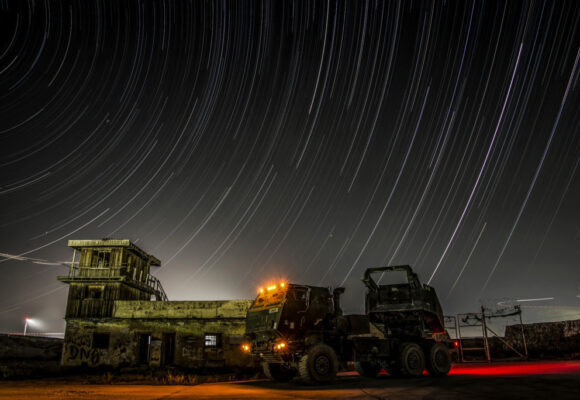
The 25 years Post 9-11 marked a radical departure from that routine. Since 9-11, the 1-121 FA has mobilized six times for a diverse array of missions across the Middle East and Central Asia. During this era, the battalion demonstrated exceptional flexibility—transforming from its rocket-artillery roots into a Security Force (SECFOR) battalion and back again, before ultimately fielding the M142 High Mobility Artillery Rocket System (HIMARS). Beyond the GWOT theaters, the battalion projected power through live-fire exercises in the Baltics and North Africa, while simultaneously supporting domestic operations in the State of Wisconsin. Between 2020 and 2024 the battalion spent more than 150 days supporting the state during the COVID-19 pandemic, civil disturbances, and the Republican National Convention.
Operation Iraqi Freedom Part I (April 2006 – July 2007)
The deployment of the 1-121 FA during OIF stands as a testament to the versatility and resilience of the National Guard. Activated in April 2006, the unit underwent a radical transformation from a traditional field artillery role to a Security Force (SECFOR) mission, primarily focused on convoy security. Over a 15-month period, the battalion’s 645 soldiers navigated extreme environmental conditions, evolving enemy tactics, and complex equipment transitions.
Mobilization and the SECFOR Transformation
The battalion mobilized on April 19, 2006, when soldiers reported to home stations in Plymouth, Sussex, and Milwaukee. This mobilization required significant organizational changes to as it transitions from a MLRS battalion with approximately 80 soldiers in each battery, to a SECFOR battalion with 182 soldiers in each company.
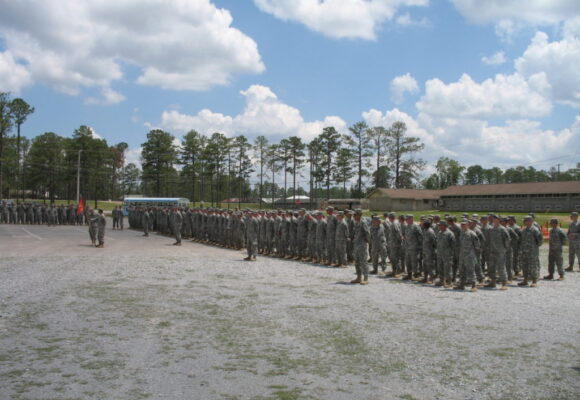
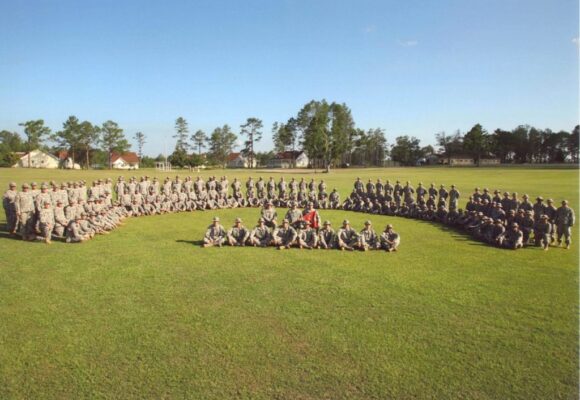
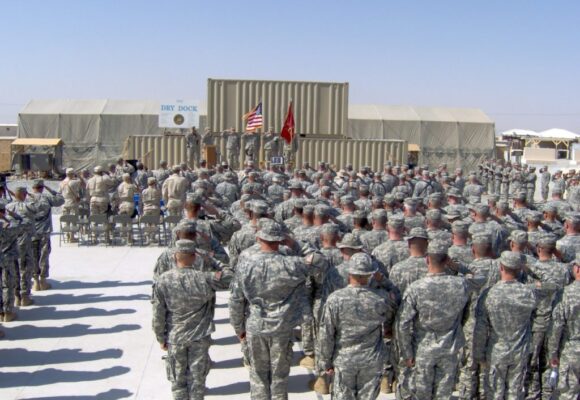
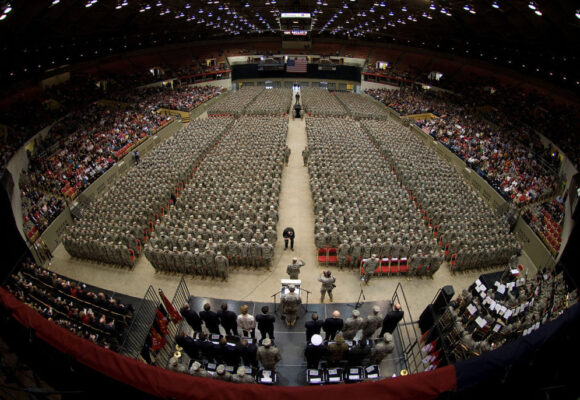
Because of the expanded personnel requirements, the soldiers from Alpha Battery were integrated into Bravo and Charlie companies. The “new” Alpha Company was composed of 76 soldiers from the Maine National Guard and 96 from the Nevada National Guard. Following a formal send-off ceremony on April 22, 2006, the unit moved to Camp Shelby, Mississippi, for three months of training. The battalion’s training shifted from artillery to the convoy escort mission. On July 17, 2006, the battalion was officially validated for deployment.
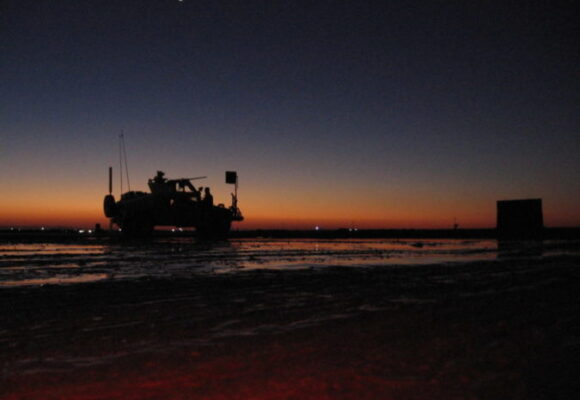
The 1-121 FA arrived in Kuwait on July 19, 2006 and fell under the 336th Transportation Group, serving as the group’s only gun truck battalion. The unit’s primary home for much of the deployment was Camp Navistar, located on the Kuwait-Iraq border near Safwan, Iraq. This location was strategically vital, sitting directly on Main Supply Route (MSR) Tampa, the primary artery for ground logistics into Iraq. The 1-121 FA executed five primary mission types, each with its own set of logistical and security challenges.
I. Sustainment Convoys
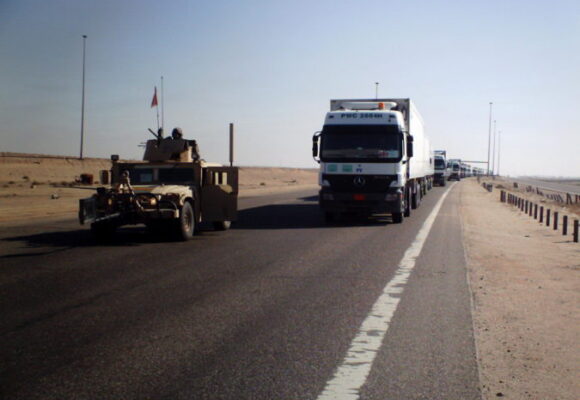
These were the “bread and butter” of the battalion’s operations. Gun truck crews escorted “white” trucks driven by Third Country National (TCN) civilian contractors from Camp Navistar to CSC Cedar, Iraq. Initially, the battalion executed the mission with 3 gun trucks escorting 30 white trucks; this later evolved to 4 gun trucks for 45 white trucks. A standard mission took roughly 3.5 – 4 hours each way, though IED discoveries and vehicle breakdowns extended the missions in some cases up to 12-16 hours.
II. Common User Land Transport (CULT)
CULT missions involved escorting military personnel and “green trucks” (HETTs and 915s) carrying ammunition and military vehicles to various Forward Operating Bases (FOBs) throughout Iraq. These missions were unpredictable, lasting anywhere from 3 days to 3 weeks.
III. Arrow Express
Similar to CULT missions, these were multi-day trips specifically designed to resupply Class IX supplies (repair parts and maintenance gear) to major hubs like BIAP, Taji, and Anaconda. The goal was speed: deliver parts and return to Kuwait for immediate resupply.
IV. Route Security Element (RSE)
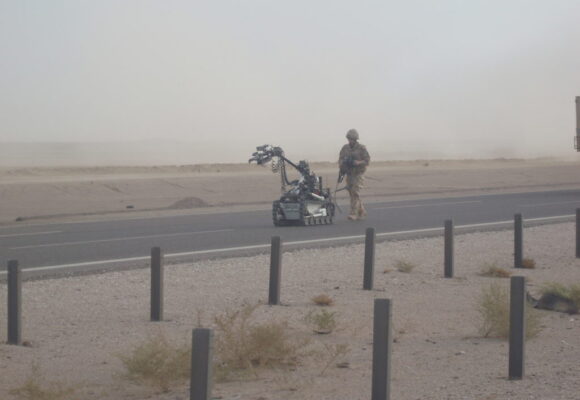
The battalion maintained a dedicated platoon focused on providing security in the vicinity Safran, Iraq and MSR Tampa near the Kuwait / Iraq border. The RSE platoon conducted presence patrols, established vehicle checkpoints, and performed route clearing designed to identify IEDs before convoys arrived.
V. KBR Recovery Escort
A 24-hour rotating mission tasked with escorting recovery assets to retrieve broken-down equipment south of “Bridge 13” (the halfway point between CSC Cedar and Camp Navistar).
Equipment and Crew
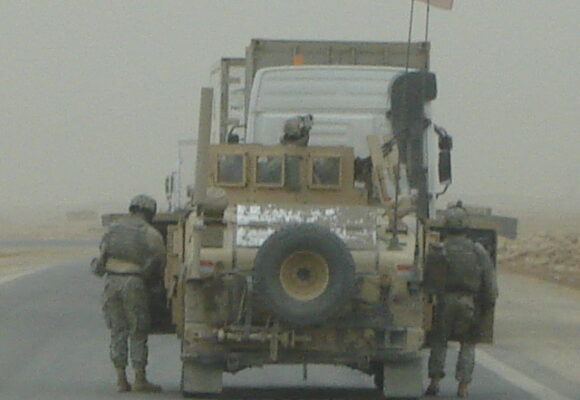
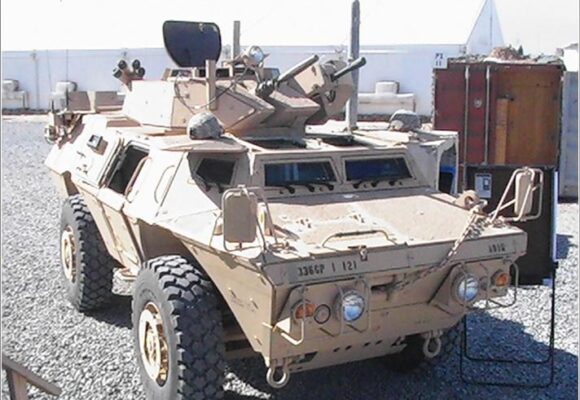
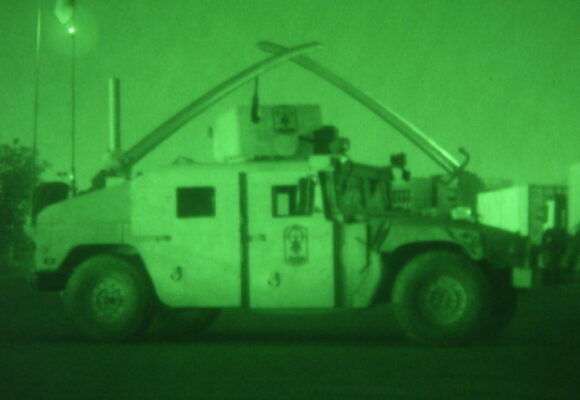
A significant portion of the deployment was defined by the modernization of the battalion’s fleet. The battalion started the mission with 132 M1114 up-armored HMMWVs with a mounted crew served weapon (M240B, M2, or MK19) operated by a gunner. The standard crew of a vehicle was 3 soldiers, driver, truck commander (TC), and gunner. The vehicles and equipment were continuously upgraded, significant fielding during the deployment included: installation of two sets of enhanced armor, new radios, electronic jammers designed to defend against remote-detonated IEDs, and a Blue Force Tracker (BFT) enabling situational awareness between vehicle and command posts with vehicle geo-location and secure text messaging. The 1-121 FA fielded the M1117 Armored Security Vehicle (ASV). The fielding was complex, requiring crews to attend weeks of training at LSA Anaconda, but it eventually allowed each squad to operate with one ASV.
Environmental and Combat Realities
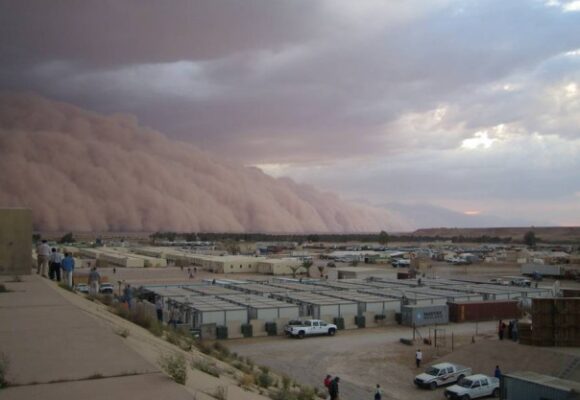
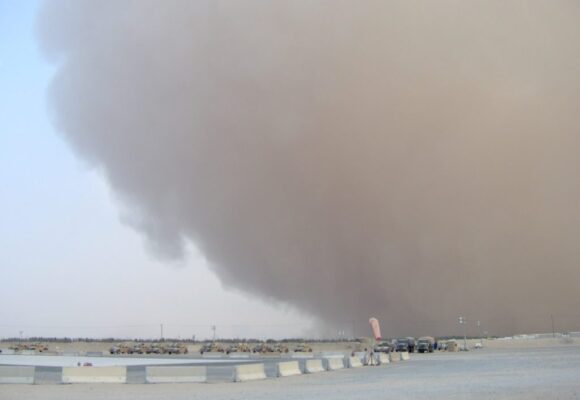
The environmental factors in Iraq were as dangerous as the enemy. Summer temperatures reached 125°F in the shade, while the interior of an up-armored HMMWV could climb to 145°F. Blinding sandstorms occasionally halted theater-wide operations. It was not unusual for soldiers to be on mission 30 for straight days, with a rest cycle consisting merely of maintenance, hygiene, and sleep.
The 12-month period the 1-121 FA was in Iraq (July 2006 – July 2007) was the highest continuous twelve month period during OIF for serious incidents across nearly every measure: IED activity, sectarian violence, and coalition casualties. The Iraq “surge” would ultimately see results with a marked reduction in incidents after July of 2007.
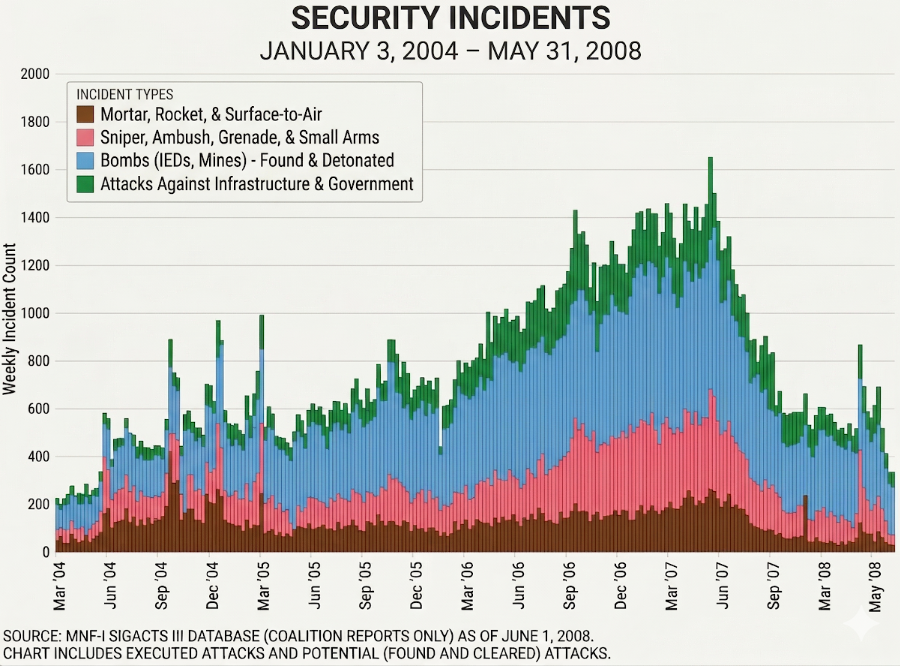
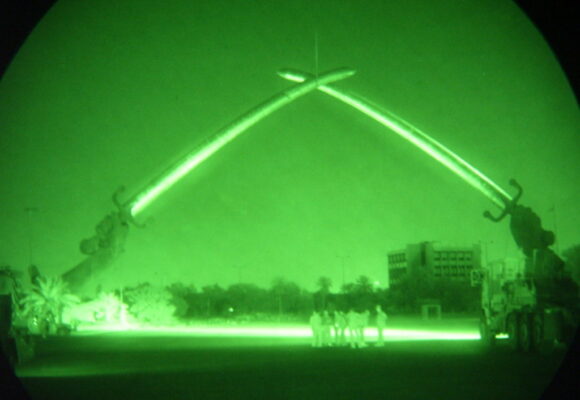
During its time in OIF, the 1-121 FA reported 345 serious incidents – averaging nearly one incident per day. It should be noted that the number of IEDs encountered exceeded the number of vehicles in the battalion, with 2.6 serious incidents per truck. The vast majority of the incidents encountered by the 1-121 FA occurred on the Main and Alternate Supply Routes (MSR/ASR) connecting bases and logistic hubs throughout Iraq. Logistic convoy movements were generally predictable and slow, allowing insurgents to plan the emplacement and often video the attacks. Some locations would become notorious, including checkpoint “59A” north of Baghdad and ASR Uranium west of Baghdad leading to the Al Asad airbase.
|
1-121 FA Serious Incidents July 2006 – July 2007 |
|
| Type | Count |
| Improvised Explosive Devices (IED) | 171 |
| Small Arms Fire | 54 |
| Escalation of Force | 34 |
| Hijackings / Attempted Hijackings | 26 |
| Complex Attacks | 17 |
Tragically, these dangers resulted in the loss of two soldiers that were killed in action: CPL Stephen Castner on July 24, 2006, and SGT Richard Parker on June 14, 2007.
Special Missions and Strategic Shifts
In May 2007, the battalion moved its operations from Camp Navistar to Camp Virginia. This move supported a broader shift in logistic support to Iraq: the opening of the Kabari Crossing and ASR Aspen. ASR Aspen was a military-only route into Iraq designed to bypass civilian traffic and enhance security. The battalion would also escort the unit equipment relied upon for he Iraq “surge” executed in 2007.
Summary of Achievements
The 1-121 FA (SECFOR) set high standards for operational readiness and efficiency:
- Distance: Covered 5,109,224 miles across 3,855 missions.
- Logistics: Moved the equivalent of 54 Brigades into Iraq.
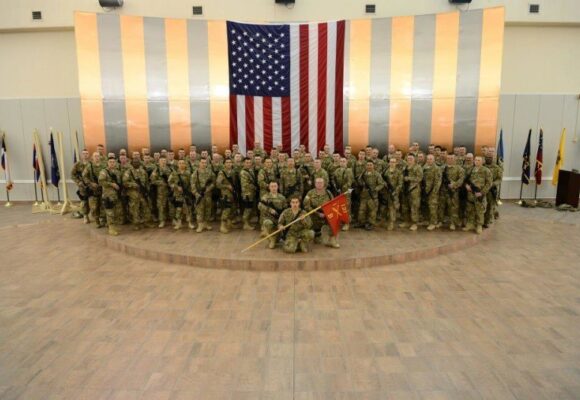
The battalion returned to Camp Atterbury, Indiana, in July 2007, followed by a final homecoming. The soldiers of the 1-121 FA were awarded 30 Purple Hearts, 26 Bronze Stars, and 316 Combat Action Badges for their service.
Operation Iraqi Freedom Part II (January 2009 – January 2010)
In September 2008, only 14 months after returning from OIF the 1-121 FA was put on notice for second mobilization. This time the entire battalion would not mobilize, instead the 1-121 FA was required to create two 125 soldier SECFOR companies that would round out the 32nd Infantry Brigade Combat Team (32IBCT). A/1-121 FA and the 108th FSC provided the core of the Soldiers, with volunteers from the balance of the battalion. Many of the same soldiers returning in July of 2007, would again mobilize in January 2010. For these soldiers, they would be mobilized for 27 out of a 45 month period illustrating the transition of the unit. The would mark a commitment of the reserve forces not seen since WWII, and leave lasting impacts to the unit and broader National Guard.
Operation Enduring Freedom Part I (January 2013 – October 2013)
Operation Enduring Freedom Part II (April 2014 – January 2015)
Operations Inherent Resolve, Spartan Shield and Freedom Sentinel (August 2018 – May 2019)
COVID-19 and National Guard Reaction Force (March 2020 – January 2021)
Post 9-11 Campaign Credit
Afghanistan
- Consolidation I
- Consolidation II (Alpha Battery)
Iraq
- National Resolution
- Iraqi Surge
- Iraqi Sovereignty (Alpha Battery)
War Dead
References
 Operation Iraqi Freedom Part I (April 2006 – July 2007)